Tag: Sony PXW-FS7M2

  • Tempo featuring Rachael Lampa

    Tempo featuring Rachael Lampa

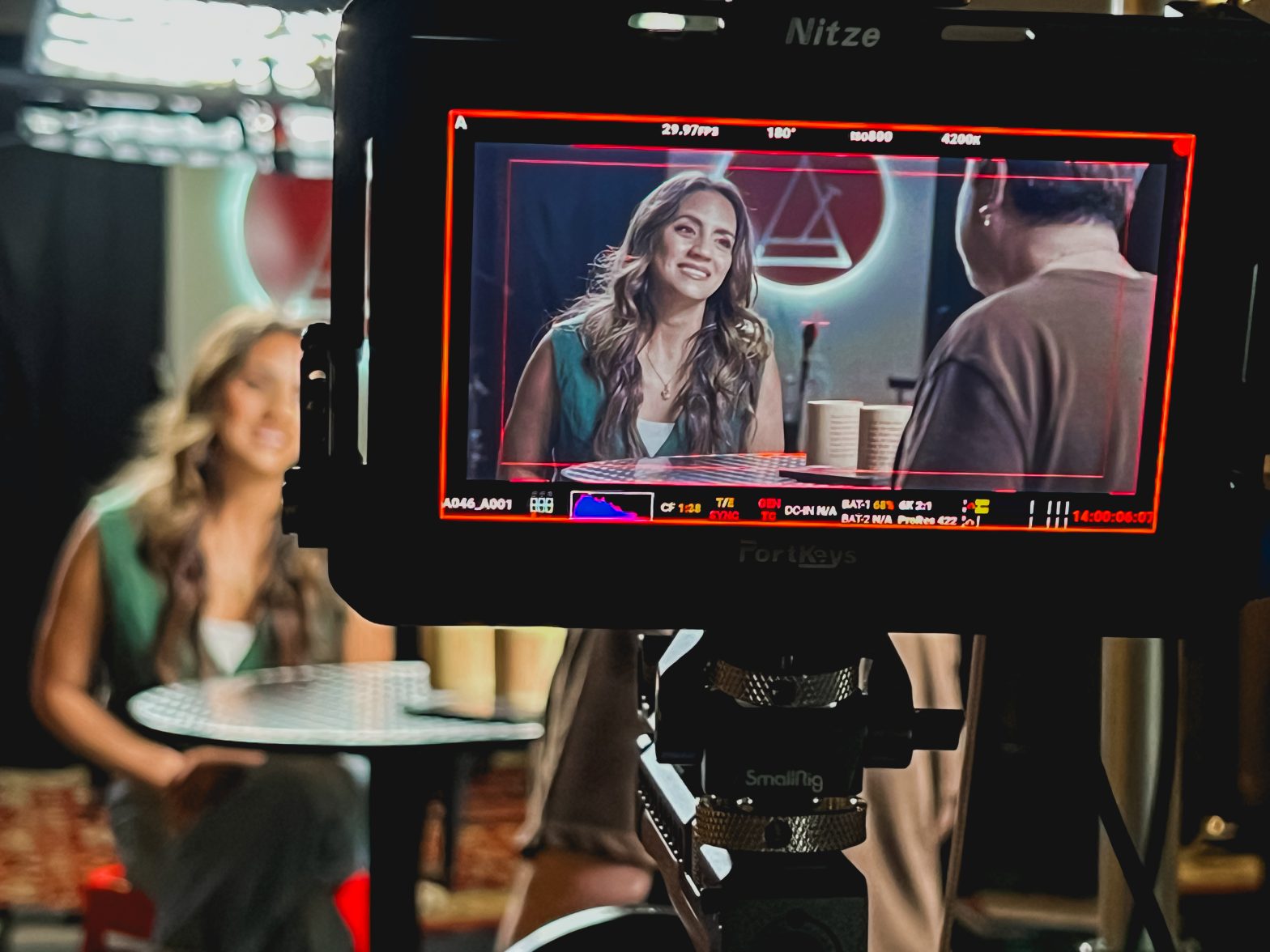
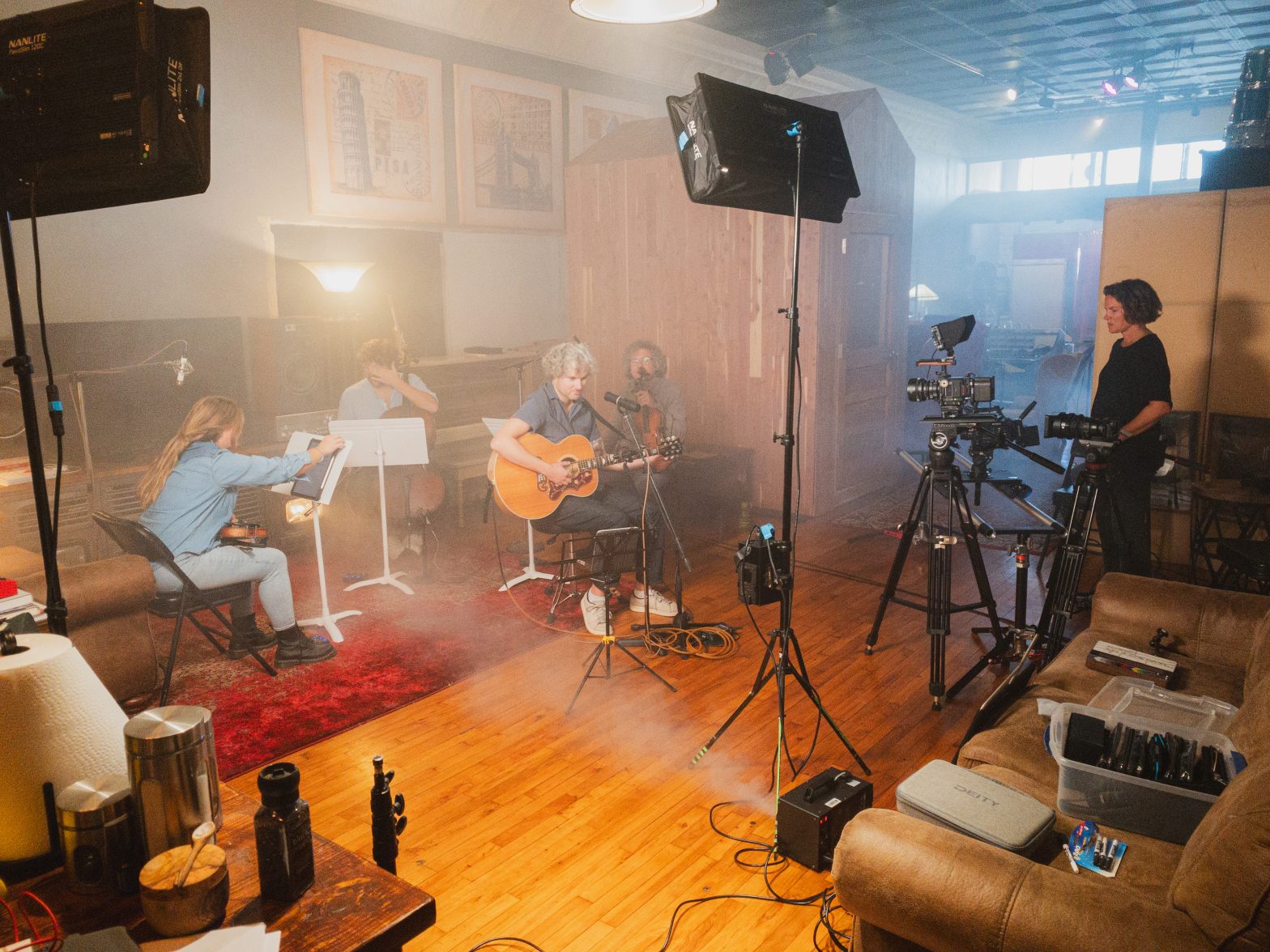
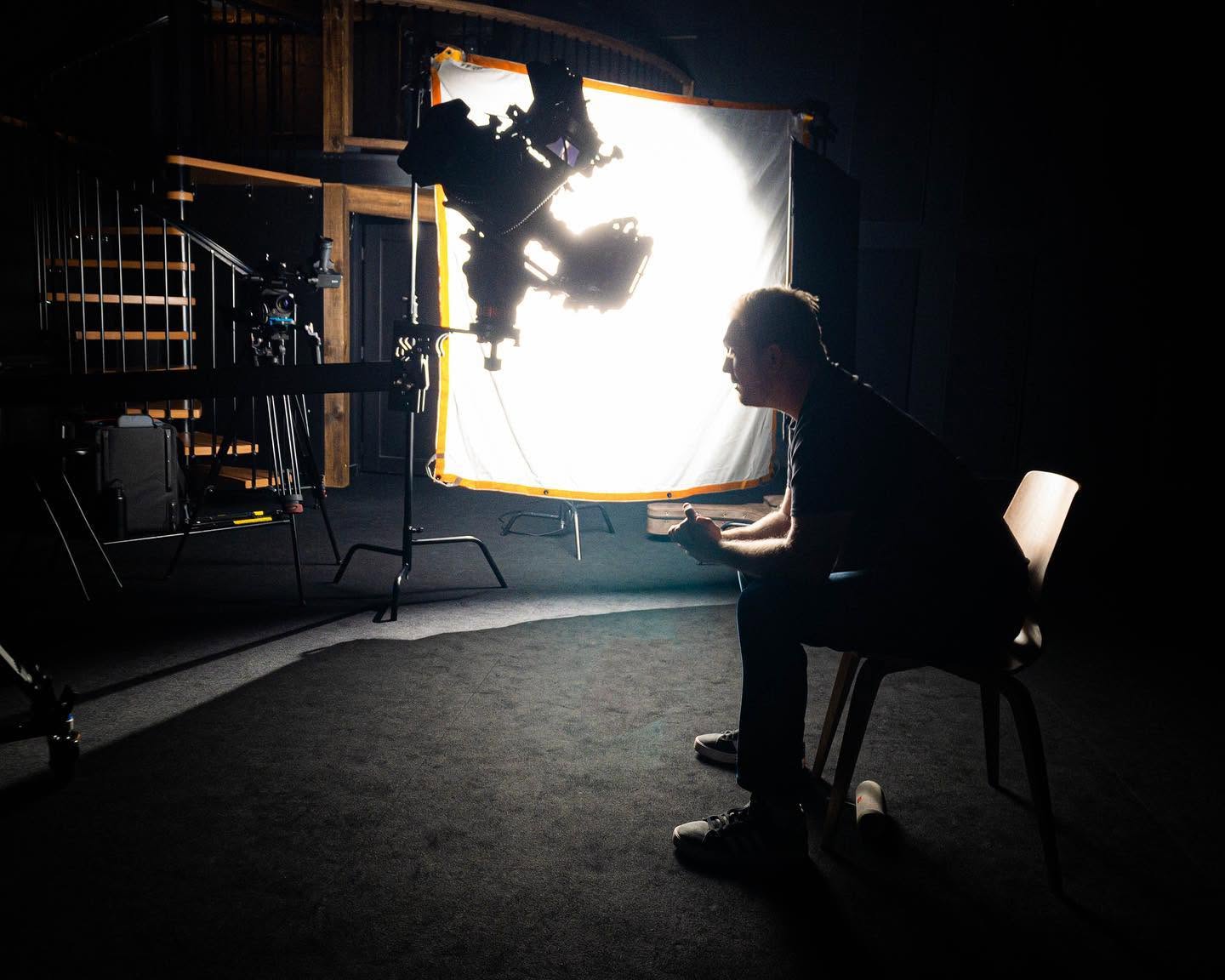
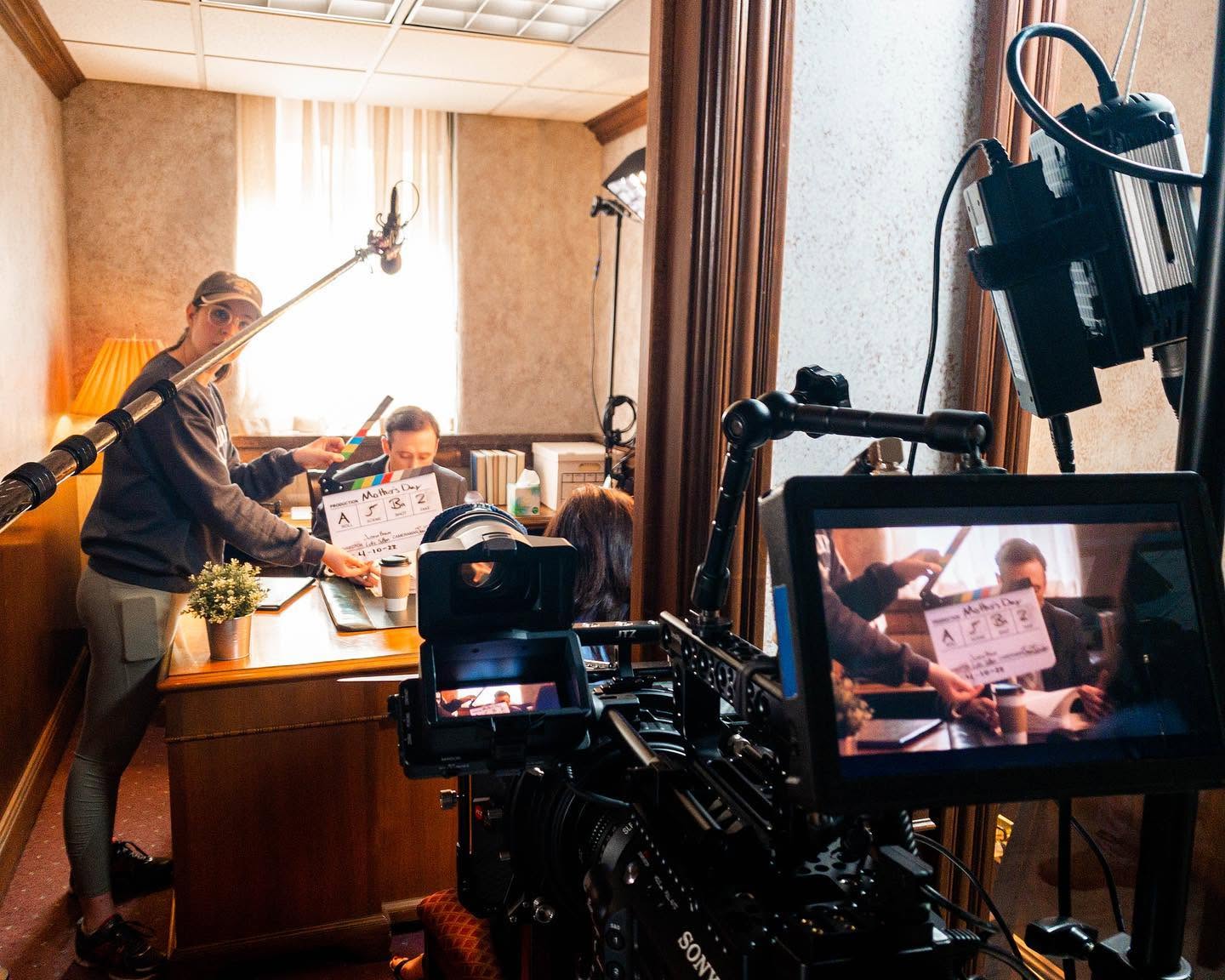
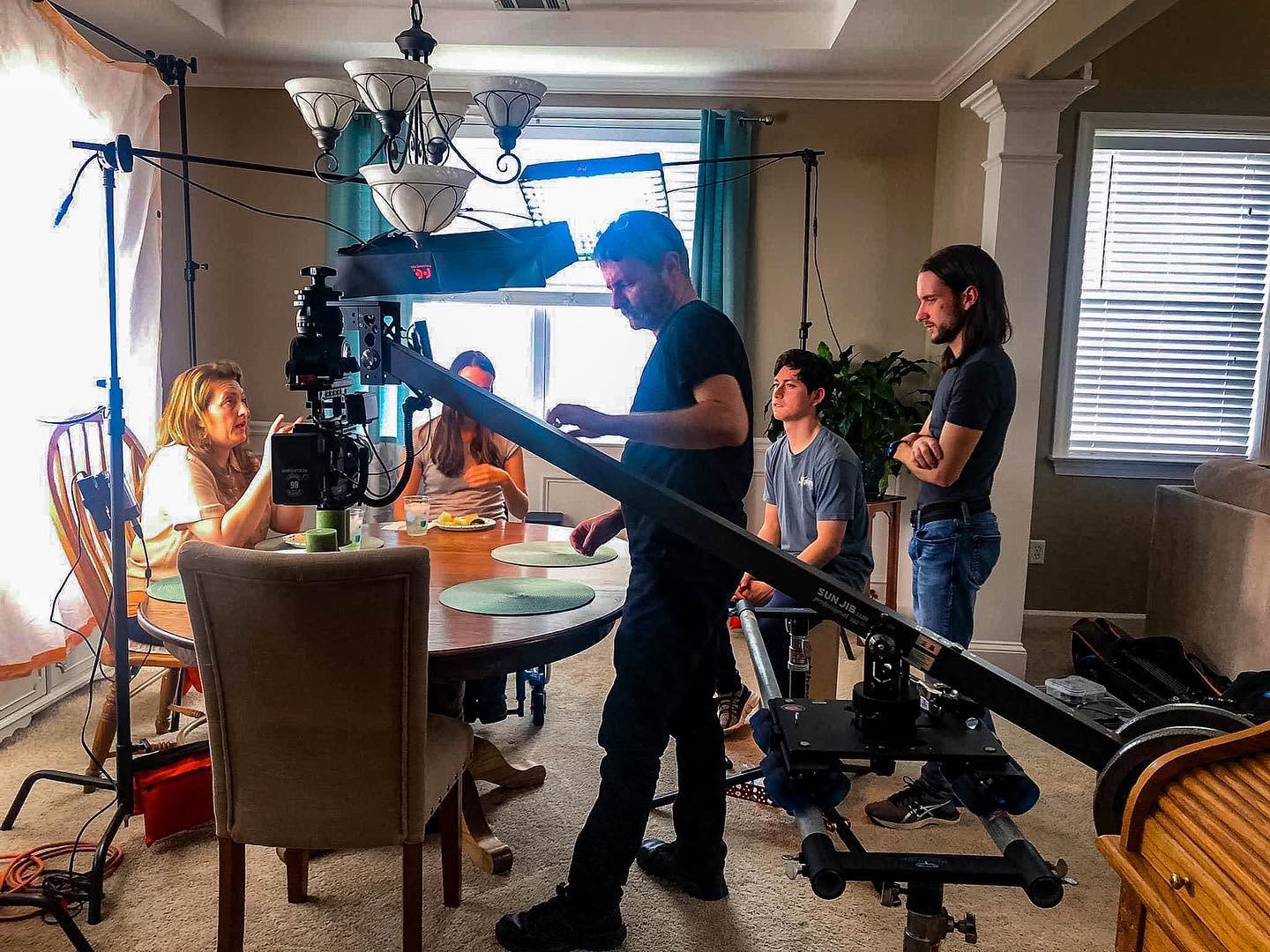
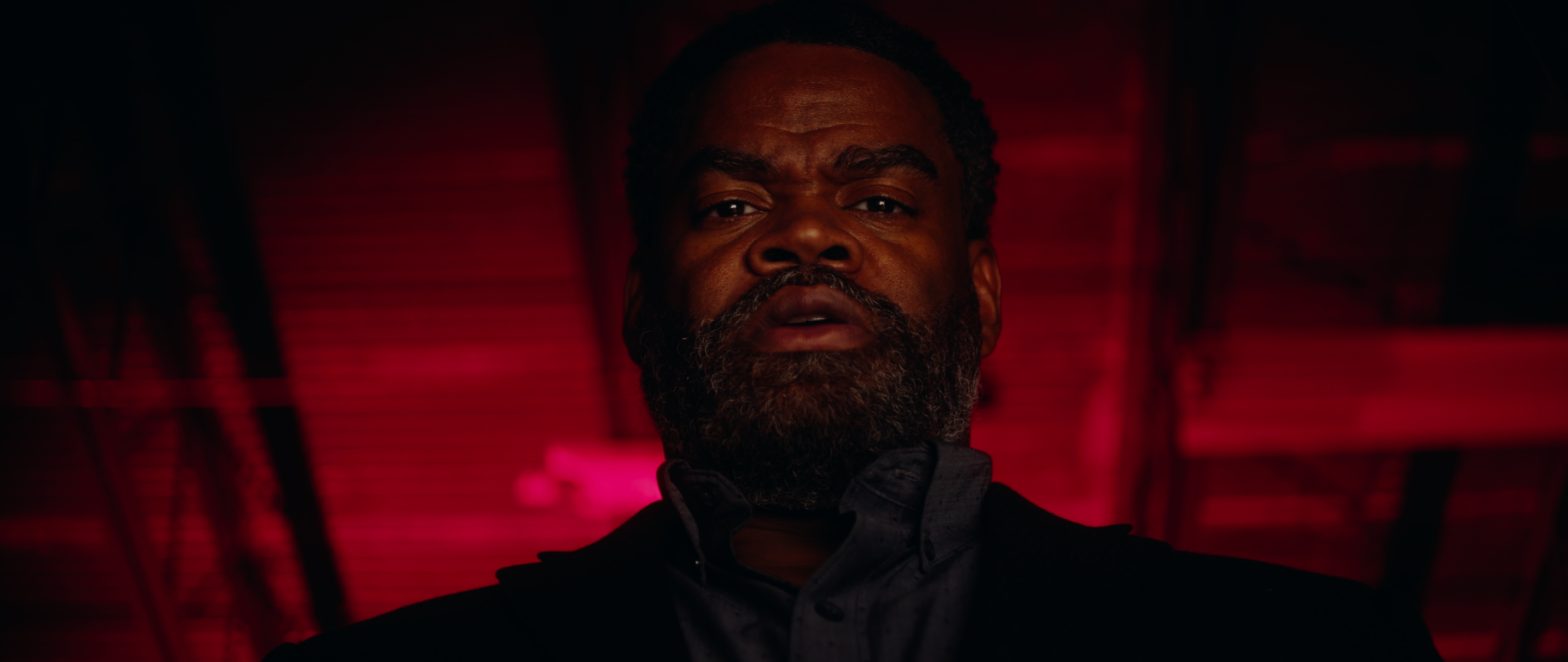
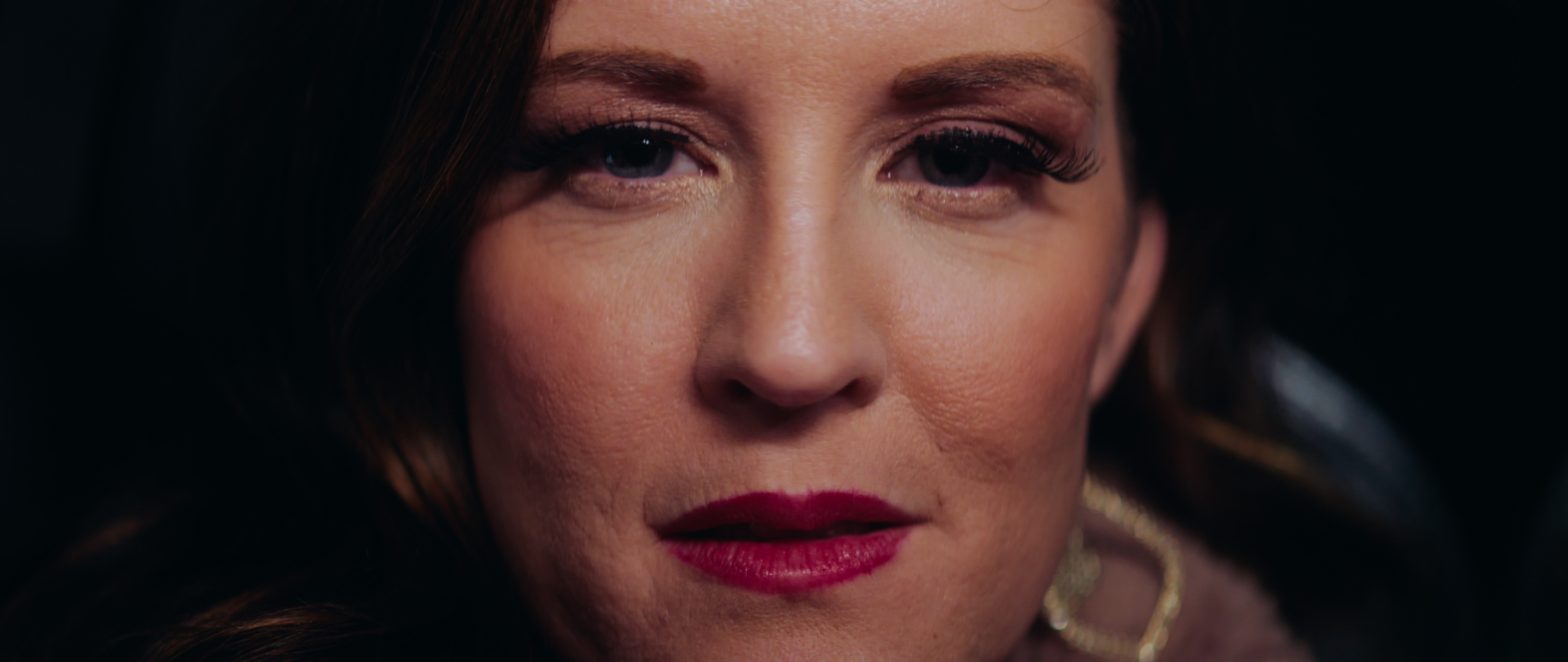
    Making something special at Tempo Nashville for musician Javier Solis and producer Tim Romero yesterday. We transformed the storied coffee shop into a production studio for the day. And despite the rain and allergy attacks, we managed to film a great interview and live music session with the incomparable Rachael Lampa and a live music audience. With two distinct lighting universes, two distinct camera setups featuring five total cameras, from load-in to load-out all in 9.5 hours with a two-man crew. Exhausting, but absolutely glorious. I’m very happy with the results and can’t wait to see the finished product.

    talent:
    Rachael Lampa
    Javier Solis

    band:
    Javier Solis
    Tommy Sims
    Uriah Zeph Solis
    Grant Pittman

    bg vocals:
    Rob
    Kynadie

    live sound:
    Abel Orta
    Luke

    tempo:
    Yvonne Solis
    Zylah Solis

    executive producer:
    Javier Solis

    producer / editor / cam op / grip:
    Tim Romero

    dp / cam op / gaffer / key grip / dit / sound:
    Jason R. Johnston

    hmua:
    Brie Beckman

    production equipment:
    Fifty Oars Motion Pictures

  • Rhose Studio Strings: Live Sessions

    Rhose Studio Strings: Live Sessions

    Here are some behind-the-scenes stills and videos from the ongoing Rhose Studio Strings: Live Sessions web series.

  • Modding FS7’s Top Handle

    Modding FS7’s Top Handle

    One of the worst things about tiny little screws is they’re easy to strip or get stuck, but very hard to remove. And they’re usually inside something very expensive so you don’t want to use too much force or you might break something you’ll regret.

    I love my FS7, and I love how easy it is to mod depending on what I need of it. For example, — depending on the job — I tend to adjust or swap the monitor rod more than most users probably do, so the head of the little screw in the top handle that holds the monitor rod is starting to strip. That screw requires a bit of tightening to keep the rod in place or else the weight of the EVF will make it tip onto the lens. One day, it will strip, and a stripped screw is no fun to remove. Me no likey. Thankfully, the thoughtful geniuses at SmallRig have come up with a solution for this exact problem.

    You may recall the last time I modded my FS7 with the SmallRig rosette handgrip. This operation is much more simple!

    The SmallRig playset comes with everything you see here. Batteries not included. GI Joe action figures sold separately.

    I purchased the “SmallRig SONY FX9/FS7/FS7 MK2 Top Handle Special Screw 2844” kit via B&H and it arrived in a tiny little box. It comes with the special screw and a hex key. First, you remove the Sony screw from the top handle.

    Look how bare the head has become!

    Next, you simply replace the Sony screw with the SmallRig special screw. Done!

    I wish it were black.

    Very straightforward. The special screw also has the same hex receiver for when you need some more torque.

    Apparently, the hex key is sometimes called a spanner. Must be a European thing.

    Easy peasy. Now I no longer have to worry about one day stripping that little Sony screw. I just wish the new screw was black so it doesn’t stick out on my all-black rig.

    Next project: painting the SmallRig special screw!

  • South Texas ISD “Back to School” Vertical Video Advert

    South Texas ISD “Back to School” Vertical Video Advert

    My first 9:16 vertical video advert. Produced for South Texas Independent School District. Envisioned as a highlight film of collected reality events (no planning, no direction, documentary-style) scheduled throughout the summer of 2019 and shot in both 16:9 and 9:16 formats, then married with 16:9 footage created the standard way (planned, lit, block, directed, etc) for previous spots. Throw some cool music and graphics and you have this spot!

    Director, Cinematographer, Editor: Jason R. Johnston
    Producer: Amanda Odom
    Writers: Jaclyn Garza, Jason R. Johnston, Amanda Odom
    House: Fifty Oars Motion Pictures

  • Rising Scholars Academy “Up For the Challenge” Advert Campaign

    Rising Scholars Academy “Up For the Challenge” Advert Campaign

    These STISD adverts are always a good challenge. I am generally hired on as a one-man-crew and handle everything from pre-production to post. I always collaborate with my clients to give them the most bang for their buck.

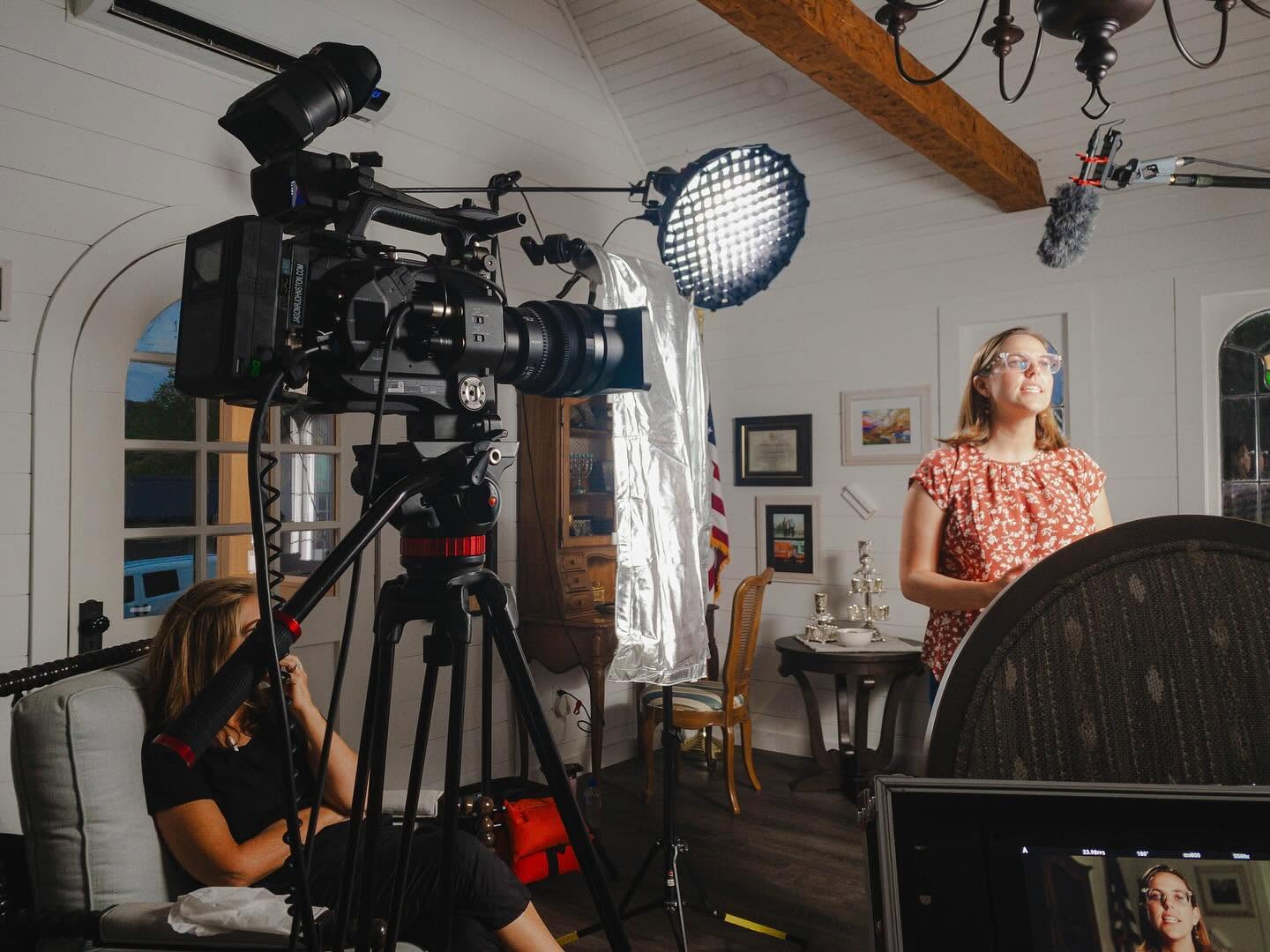
    I use my Sony FS7 Mark 2 camera package extensively nowadays. Recorded in April, this shoot took advantage of my Rayzr7 300w LED fresnel lighting kit, and cinema-grade PL lens package, though I only used my 25mm T2.2 prime lens.

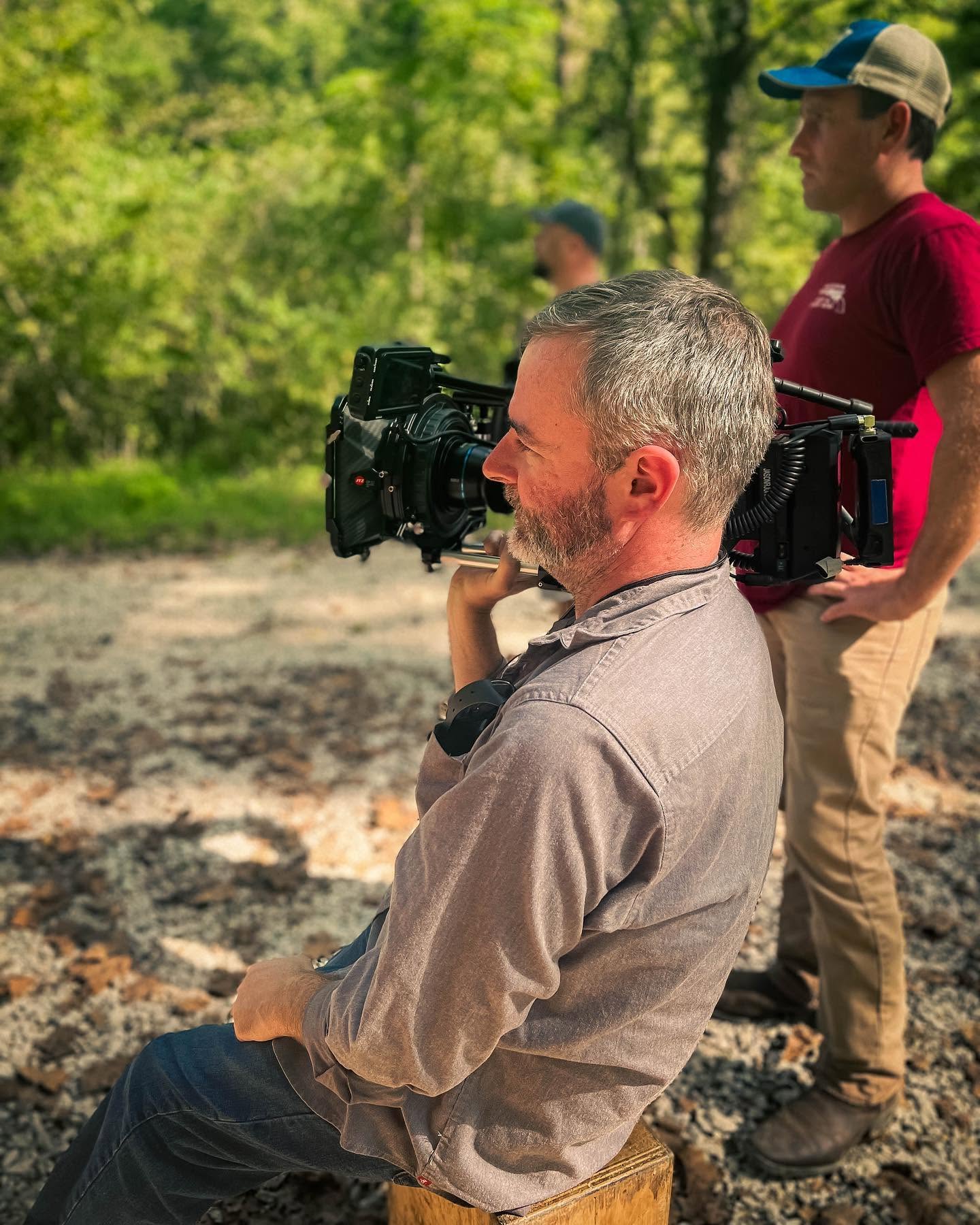
    Me recording STISD RSA students working with one of their robots. BTS photo by Jacky at STISD.
    I’m trying to keep up with the RSA football players while framing the shot, keeping it in focus, and not dying. BTS photo by Jacky at STISD.
    I’m on the floor getting a shoe’s POV of the ladies in a huddle. BTS photo by Jacky at STISD.
    My Sony PXW-FS7 Mark II taking a break in the RSA gym.

    On this particular shoot, I had only two 8-hour days to shoot everything I needed with myself as director, DP, camera operator (and the rest of the camera department), gaffer, best boy and key grip (and the rest of G&E), and sometimes PA. I always have great help from Amanda and Jacky, the STISD Public Relations crew. We’ve been working together since 2012, and they trust me enough to let me go crazy on just an idea of what the adverts could be. 

    The “Up For the Challenge” advert campaign was another great time on set, and was fun to figure out in editing. I always look forward to these STISD projects.

    Director, Cinematographer, Editor: Jason R. Johnston
    Producer: Amanda Odom
    Writers: Jaclyn Garza, Jason R. Johnston, Amanda Odom
    House: Fifty Oars Motion Pictures

  • Modding FS7’s Handgrip

    Modding FS7’s Handgrip

    One of the reasons I love my Sony FS7 Mark II is the fact that, other than a media card, it shipped with everything in the box I needed in a camera kit. I love that the supplied LCD came with both a collapsible shade and a loupe which effectively turns it into an EVF, and a LANC smart handgrip with extending arm, and a few other things. But, there’s always room for improvement.

    What I don’t love so much about the handgrip is that it’s not intended to be removed from the arm. Attached to the body via the arm’s Arri rosette, I can only position the handgrip so close or so far away from the body, and even at it’s closest, I still wind up jabbing the handgrip into a mattebox. I also can not angle the arm positive when extended forward which means the handgrip will always be in the negative and cause the entire rig to roll to port when sitting it on a flat surface. It can never rest flush with a flat surface with the handgrip/arm assembly attached.

    The handgrip is intended to be positioned about chest-level in shoulder-mount mode, but I find that method of operating uncomfortable and unresponsive. I am not a human tripod…even though sometimes I have to be. Because the handgrip is affixed to the arm, my options are limited. I don’t like that. I need to be able to position the handgrip wherever I want.

    After a bit of research I discovered that I wasn’t the only FS7 owner/operator who felt the same way. We love the handgrip, but hate being stuck with the arm. Thankfully, there are a few solutions. The one I settled on is from Chinese third-party manufacturer of camera accessories, SmallRig. Their “Handgrip Rosette Adapter for Sony PXW-FS7/FS7II 1887” kit converts the base of the connection between the handgrip and the arm into an Arri rosette so you can mount it anywhere, including directly to the body of the FS7.

    Assembly is straight forward. First, I needed to remove the handgrip from the arm by gently removing the four hex screws from the assembly. They’re glued in so you have to make sure you don’t break the head off or strip them. Thankfully, the process went without issue.

    Next, I needed to align the first part of the adapter assembly to the two locking pins and attach it with either the four replacement screws or the OEM ones. I decided to use SmallRig’s.

    After the first part of the assembly was affixed, I then needed to attach the final part containing the thumb screw via the two larger hex screws.

    Now I needed something to attach the handgrip to. I had considered this when ordering the parts and thought the SmallRig 15mm Dual Rod Clamp with Rosette would work well.

    Wanting to continue to keep the spirit of a low camera profile, I wanted the ability to operate the FS7 either with it’s built-in shoulder pad, or on a VCT-14 shoulder pad, but without having to disassemble anything. With this in mind, I also purchased a SmallRig Camera Base Plate with Rod Rail Clamp for Sony FS7, and Manfrotto 501-style dovetail.

    I attached the base plate to the bottom of the FS7.

    Then attached the dovetail using the provided 1/4″-20 screw, and an additional one I had laying around. I made sure to keep the aft parts flush with each other so they don’t potentially dig into my shoulder if positioned underneath the shoulder pad.

    I was pretty happy with both assemblies and decided to keep building out my rig to see how it all fit together.

    It’s a very tight setup. I really like being able to position the handgrip wherever I want, and in tandem with a left-hand grip for extra support. I found this method much easier to support various front-heavy lens weights as I can extend the handgrip wherever I need it to accommodate whatever the situation. The best part is the handgrip can be positioned right at the mattebox which is where I like to put my hands to be able to kinetically operate the camera as organically as possible while shoulder-mounted.

    Sure, I could have just used any handgrip, but the ability to have the Sony smart handgrip is huge for being able to have LANC control over the camera and certain lenses. Why buy an expensive new LANC handgrip controller when I can just slightly mod the one that came with the camera and save a lot of money? In the end, the entire endeavor cost about $155, shipped (free shipping with Amazon Prime). I order everything on Tuesday, and it all arrived today except for the 6″ rods which arrive Monday. I can’t wait to try out the new equipment on my next shoot.

    What do you think of my modding exercise? Have you tried modding your FS7 handgrip? What are your experiences with modding your FS7? I want to know in the comments below!

  • Multi-cam Setup for Commencement Ceremony Livestreams

    Multi-cam Setup for Commencement Ceremony Livestreams

    My secret weapon is the Blackmagic Design Web Presenter with Teranex Mini Smart Panel. The Web Presenter features both SDI (via BNC) and HDMI inputs. The optional Mini Smart Panel gives the Web Presenter the ability to live switch between the two inputs using smooth transitions, as well as monitor the program feed, and access settings more easily using visual menus. This effectively converts the Web Presenter into a two-input live switcher with professionally customizable options.

    My Sony PXW-FS7 Mark 2 would be fitted with a telephoto lens and provide medium podium shots of all the presenters. My Panasonic AG-DVX200, with it’s affixed servo zoom lens at its widest setting, would remain mostly static throughout the events, providing me with something to cut to when the presenters changed. FS7-II and DVX200 would be connected to Web Presenter via SDI and HDMI, respectively.

    The Web Presenter’s outputs are another worthy topic. Yes, the whole point of the Web Presenter is its primary function of converting a high-bandwidth broadcast quality signal and converting it to a 720p H.264 signal that is more easily digested by a computer’s web broadcaster (in this case, my 27″ iMac 5K Retina running OBS to my client’s YouTube Live) via USB. It has SDI and HDMI loop-outs, yes. But, the biggest feature here is Program Out via SDI. This output sits before the conversion happens but after the live switching, meaning the broadcast-quality live switching can be output uncompressed via SDI to a recorder before the coversion to low-quality web deliverable intended for live stream. That means a Full HD copy of the live-switched event can be recorded during the live stream.

    I own an Atomos Ninja Blade Full HD recorder which would be perfect for this job. However, it is HDMI only so I needed a way to convert the SDI Program Out coming from the Web Presenter. Another requirement was the house video switcher needed to be fed an SDI or HDMI signal from my nest so whatever I was livestreaming was also playing live on video projectors in the house. The Blackmagic Micro Converter SDI to HDMI, with SDI Loop-out, was my solution.

    From Web Presenter’s Program Out via SDI to Micro Converter SDI to HDMI’s SDI-In, I then fed the house switcher with SDI Loop-out, and my Ninja Blade with HDMI-out. The Ninja Blade could then be monitored on my SmallHD 7″ AC7-SDI via HDMI. I used two Atomos Micro to Full HDMI coiled cables for this.

    During one of the ceremonies, the client requested a special video be played on the same projection screens as the livestream. To do this, the house video switcher was used to switch between my livestream feed and a Macbook containing the special video. The Macbook used a Thunderbolt (actually, Mini Display Port) to HDMI adapter to feed the switcher the video, plus a 1/8″ TRS to XLR adapter to feed the house audio patch.

  • My Cameras: A History

    My Cameras: A History

    Since watching Star Wars (possibly The Empire Strikes Back) as a wee little baby I had always been interested in photography, cinematography, and the moving image. Cameras, therefore, have been a large part of my life since the very beginning. Following is a history of my cameras (and me) throughout the years.

    In my youth (pre-high school) I had used the Kodak 104 Instamatic, a little plastic point and shoot 110 film camera. It changed my life, and I would not use an SLR camera until high school. In 1994 I was introduced to 35mm single lens reflex cameras with the Pentax K-1000, an inexpensive amateur device that required no batteries unless you wanted to take advantage of the exposure meter in the viewfinder. The K-1000 was assigned to me in journalism class during my sophomore year in high school.

    The next year, I was asked to take over the photography department while the journalism supervisor dealt with the reporters. I was then responsible for teaching use of the cameras, dark room technique and basic photography etiquette to my peers and upperclassmen students alike. And I was good at it. The kids learned a lot and their photographs got better as the semester trolled along.

    My senior year, the school upgraded to the Canon EOS Rebel. Gone were the days of K-mount fully manual, heavy metal cameras. Now, you could have a fully automatic experience with little photographic insight in a plastic, lightweight camera with an on board flash. These new auto focus cameras needed batteries and the consumer-class zoom kit lenses weren’t as sharp, fast or precise as the Pentax’s 50mm primes, but the Rebel did auto forward the film.

    After graduation, I signed up for a Discover Card on my way out of an English class my first semester of college. One of the first things I ever purchased on a credit card was a Canon Rebel XS-II kit along with a Canon case from Best Buy. The setup worked fine for several years until one day the curtain stopped working. I never sent it in for repair and because of my hectic work schedule, I silently walked away from photography.

    In 2002, after shooting some short films and getting my schedule in order, I decided to pick up a Canon PowerShot G3. I figured digital was the way to go for an uninterested consumer like myself and that’s because years ago I swore that I’d never go digital anyway. But that was also when I swore I’d never leave photography.

    The G3 worked great as I started to feel the pull back to photography. In 2003, I figured I would stay digital and move up toward the SLRs again: this time I got the Canon 300D Digital Rebel. The Rebel worked great until I dropped it after one of my first model shoots (in fact, I think it was my second model shoot ever) in 2004. The damage to my Rebel was an excuse to upgrade to the Canon EOS 20D.

    Four years later, the 20D has been so good to me, I hadn’t been concerned with upgrading camera bodies at all. Focusing instead on purchasing lenses such as the Canon EF 50mm f/1.8-II normal prime lens, as well as investing in a few affordable Canon L-series lenses. Because a camera body is just a light-tight box with a hole in it. Image quality and control is all about the glass in front of the body. I purchased a Canon EF 17-40mm f/4L USM normal/wide zoom lens, and a Canon EF 70-200mm f/2.8L USM telephoto zoom lens.

    In 2008 I decided to apply what I had learned about photography up to that point back into 35mm film. One of those “if only I knew then what I know now” things. I went old school and won at eBay auction the Canon FD-mount Canon AT-1 and a fast Canon FD-mount prime lenses. I also purchased a Canon PowerShot SD1100 IS as I began to value smaller cameras that could fit in my pocket and take anywhere. This was also the year I purchased a Sekonic light meter and began to properly expose myself to, well, proper exposure. The AT-1 is sitting on a shelf, while the SD1100 eventually was submerged in water and never recovered. 2008 is also the year I began to try my luck at videography and cinematography.

    After working on a few short films in 2008 and 2009 I realized that cinematography made me very happy. So, in March 2010 I purchased a Canon EOS Rebel T2i for the purpose of honing my video and cinema skills, as well as to supplement my indefatigable 20D. The 20D eventually began to eat my CF cards and died in the middle of a commercial jewelry photo shoot. Luckily, I had the T2i as a backup and so decided it was time to retire the 20D after six years of professional use. I wound up shooting quite a lot of short films, music videos, and television commercials, with my faithful T2i over the years, even as the rubber bits began to peel off due to the heat, salt water, and sand, and other rough elements I constantly exposed it to. April 2016 my little T2i died on a dry rental. I still haven’t gotten it back from whomever still has it.

    June 2013 I was finally able to purchase the Blackmagic Cinema Camera 2.5K EF (BMCC), paid in full by a commercial job for a furniture store client. The camera worked flawlessly on its trial run, however the hard drive I saved the footage to did not. I lost most of the footage, pissed off the client, experienced the positive side of having a paper trail (contracts, release forms, etc), and learned a valuable lesson in backup redundancy.

    January 2016 I was able to purchase my first 135-format digital camera, the Canon EOS 6D. An upgrade from the soon-to-be-DOA T2i, the 6D became my primary photography camera until I decided to use it to also replace the BMCC to shoot documentaries and other video work I really needed a proper video camera for as the BMCC was too damn clumsy to work with.

    I finally got that proper video camera in May 2016 when I purchased the Panasonic AG-DVX200 from a vendor in Dallas, TX. The DVX200 has served the 90% of my client work: videography. Because DVX200 also sported a logarithmic profile, I decided to also use the camera on jobs where I might normally have preferred the BMCC and its superior ProRes codecs or CinemaDNG raw, such as television commercials and short films. But, the DVX200 was much simpler to work with, despite its limited 8-bit 4:2:0 codec that was only about as good as the T2i ever was. DVX200 continues to serve me for video work, but I knew I would need a special camera for that other 10% of my work: cinema.

    July 2017 I took to the skies with the DJI Mavic Pro and began to pursue legitimacy as a commercial UAS remote pilot.

    Taking on a job as a state college marketing department’s photographer (read: button smasher), I began to lose my love for the art. I decided I needed a focused, deceptively simple, but most of all fun, camera only to be used for stills in an effort to rekindle the passion. That camera, to me, was somewhere in Fuji’s X100-series. Over the years I had been thinking about the X100 cameras, and as I began to grow tired of what used to be my biggest passion in life, I decided to take the plunge on the most up-to-date, most mature, and most fully realized version of the series. So, in August 2017, I purchased my Fujifilm X100F. It’s the kind of camera I can take with me anywhere, it communicates with my iPhone and I can make pretty photos with it in just about any situation. The film simulations are adorable. It’s fast, nimble, and challenges me to be a better photographer and artist in every respect. I adore my X100F.

    February 2018 was finally the time to get that special cinema camera. After years of careful consideration, I decided to purchase the Sony PXW-FS7M2 from a vendor in Austin, TX. A mature, improved FS7, the Mark 2 is pretty much everything I ever wanted in a specialized cinema camera, as well as in a general purpose video camera. The locking lever E-mount and electronic variable ND filtration were the paramount reasons for considering the FS7M2 over the original – and slightly less expensive – FS7. Combined with a lovely CineEI mode and a certain set of LUTs, I am convinced I own now a miniature Arri Amira. So far I have only used it a little bit (just bought it a few weeks ago) but it is proving to be my most favorite camera I’ve ever owned. I can’t wait to see what the future has in store.

    June 16, 2019 – Purchased a GoPro Fusion 360 at Best Buy in Brownsville, Texas.

    December 7, 2019 – Purchased a Canon EOS 6D Mark II at Best Buy in Brownsville, Texas, along with a Canon EF 50mm f/1.4 USM, Canon EF 85mm f/1.8 USM, and Canon Speedlite 430EX III-RT external flash.

    April 10, 2021 – Purchased a Sony a6400 at Precision Camera in Austin, Texas, after a Mother’s Day photo session.

    October 7, 2022 – Purchased a RED Komodo through B&H Photo’s website. I was able to pull the trigger on this after careful consideration since the camera’s announcement, and upon being paid for working on the feature film M30 Oxy as DP. As of November 21 I have filmed pickups for Big Trip’s Phoenix, shot a commercial for Intrigue Boutique, and the music video for Ainsley Costello’s Cherry On Top. Because of it’s size, ease of use and customization, and easy ProRes workflow with Final Cut Pro, the Komodo has quickly become my most favorite camera I’ve ever owned.

    This article was originally titled “My Photo Cameras: A History” and written July 5, 2008, before I became a cinematographer.

  • Rio Vista Dentistry Branding Film

    Rio Vista Dentistry Branding Film

    Day 1

    December 8, 2017 – Snow day! Somehow the weather worked out perfectly for snow in subtropical south Texas. Perfect for anyone who has yearned to build a snowman on the beach, but not perfect when I am supposed to be shooting evergreen exterior footage of the Allure Dental office in Harlingen, Texas.

    Today I photographed stills images of the doctors and staff at Rio Vista Dentistry to populate their upcoming newly designed website. Portraits were shot of all key staff members, as well as a few groups for Christmas cards.

    I then began video recording of b-roll footage of the doctors and staff at work for a branding film I will produce to coincide with their new website. As I shot 4K video footage with my DVX200, I would then simply stop the action and capture stills photos with my 6D. This way both the photos and the videos would have a similar look: same lighting, same angles, same fields of view.

    Once I wrapped the staff, I walked the office with Mavic Pro (which I intended to record jib-like exterior shots but was outgunned by Nature) and recorded Steadicam-like flying shots of the office interiors using Mavic’s gimbaled 4K camera.

    After breaking for lunch, we returned to the office to capture patient testimonials. It’s difficult as a solo shooter without assistance running an interview whilst also being aware of the camera, sound, and lights. But, I managed to get it all done on time and on budget. Everything went smoothly, the doctors were impressed and I was gifted a bottle of red wine. The doctors interviews and exteriors will need to wait for another day.

    Day 2

    January 19, 2018 – Early this morning we continued production of the branding film as I was scheduled to interview doctors Bonnie and James. As always I generally prefer to travel light when in one-man-production mode. I trollied my DVX200, three Dracast 1×1 LED light kits, audio gear, tripod systems, and light stands, in just a few bags. Each interview lasted about 45 minutes. I still need to grab exterior shots and a few shots of the lobbies and other area of the office with exterior views, weather permitting.

    Day 3

    February 6 – Today the weather finally cooperated and we were able to continue production of the branding film. This is the first project I was able to use my new Sony PXW-FS7 Mark II on as I just purchased it in Austin three days before. I was finally able to fly my Mavic Pro before the office opened after lunch to grab some lovely jib-like exterior shots. Also, I shot redux portraits of doctor Bonnie.

    Once the film is completed it will become available to the web developers who will place it on the new website for its launch.

    Delivery

    February 20 – Finally delivered! Assembled and finished in Final Cut Pro X, the film is a brief tour of the office and overview of their services, peppered with patient testimonials, as well as informative monologues by the doctors, all tied together with succinct narration. Told with minimal effects or graphic embellishments, and some lovely dramatized footage of the staff in action, the delivered branding film for Rio Vista Dentistry is just shy of five minutes in total duration.

    Rio Vista Dentistry loved the final film and approved it with zero feedback or revisions.

  • My Next Camera Revealed

    My Next Camera Revealed

    After months of deliberation (and a bit of saving up), I finally decided on my next cinema camera. Upgrading from my old Blackmagic Cinema Camera 2.5K EF I purchased in 2013, plus some heavy lifting by the DVX200 and 6D, I felt it was time for a change.

    Considering all the types of digital video work I do, I am in need of a Swiss Army knife: a camera that can be used both for ENG and film-style work. A camera that feels just at home with a servo-zoom broadcast lens or a fast cine prime. A camera that can give me UHD at 4:2:2 10-bit with an Intra-frame codec at reasonable Mbps rates, but also give me an option for DCI 4K raw if I need it at a later time. A camera that works right out of the box without a lot of rigging. Plus, I do not want to be handicapped by a miniscule option of lens mounts.

    I decided on the Sony PXW-FS7M2.

    Here’s why.

    The main reason is the Lever Locking E-mount. That versatile mount sits in front of the same Super 35 sensor used in the F5 CineAlta, but in the more compact body of an enhanced FS7.

    Second reason is the incredible electronic ND with stepless intensity from two to seven stops of light reduction without perceptable color shifts or other degradation.

    Third reason is as much as I’d enjoy an EVA1, by the time I’ve purchased other bits to rig it up to the out-of-the-box level of an FS7, I might as well have purchased an FS7. Also, I feel the price difference between the FS7 and FS7M2, given that both items from the first two reasons above are both exclusively for the FS7M2, is a justifiable price for a worthwhile upgrade.

    Also, I believe the FS7M2 will provide a suitable platform for ‘future-proofing,’ including further customization and expansion such as cinema rigging, various lens mount adapters, monitoring, brick battery system integration, power and signal distribution systems, wireless video taps, and other modifications, all of which may be securely bolted into the system so it behaves as an integrated unit rather than a DIY ‘frankenrig’.

    Though I have long been vocal of my dislike for “Sony colors”, the FS7-series’ CineEI mode and the ability to view or bake in LUTs, has changed my mind. Even the classic Custom mode with it’s SLOG options and matrix flexibility have won me over in recent tests with the fully upgraded mark one FS7, particularly tweaks to match color between FS7 and Arri Amira. I believe FS7M2 is clearly a tool that is only as good as the human using it. I always look forward to using a tool that works just as hard as I do.

    I intend to purchase my Sony PXW-FS7M2 next week in Austin. Did someone say ‘roadtrip?’