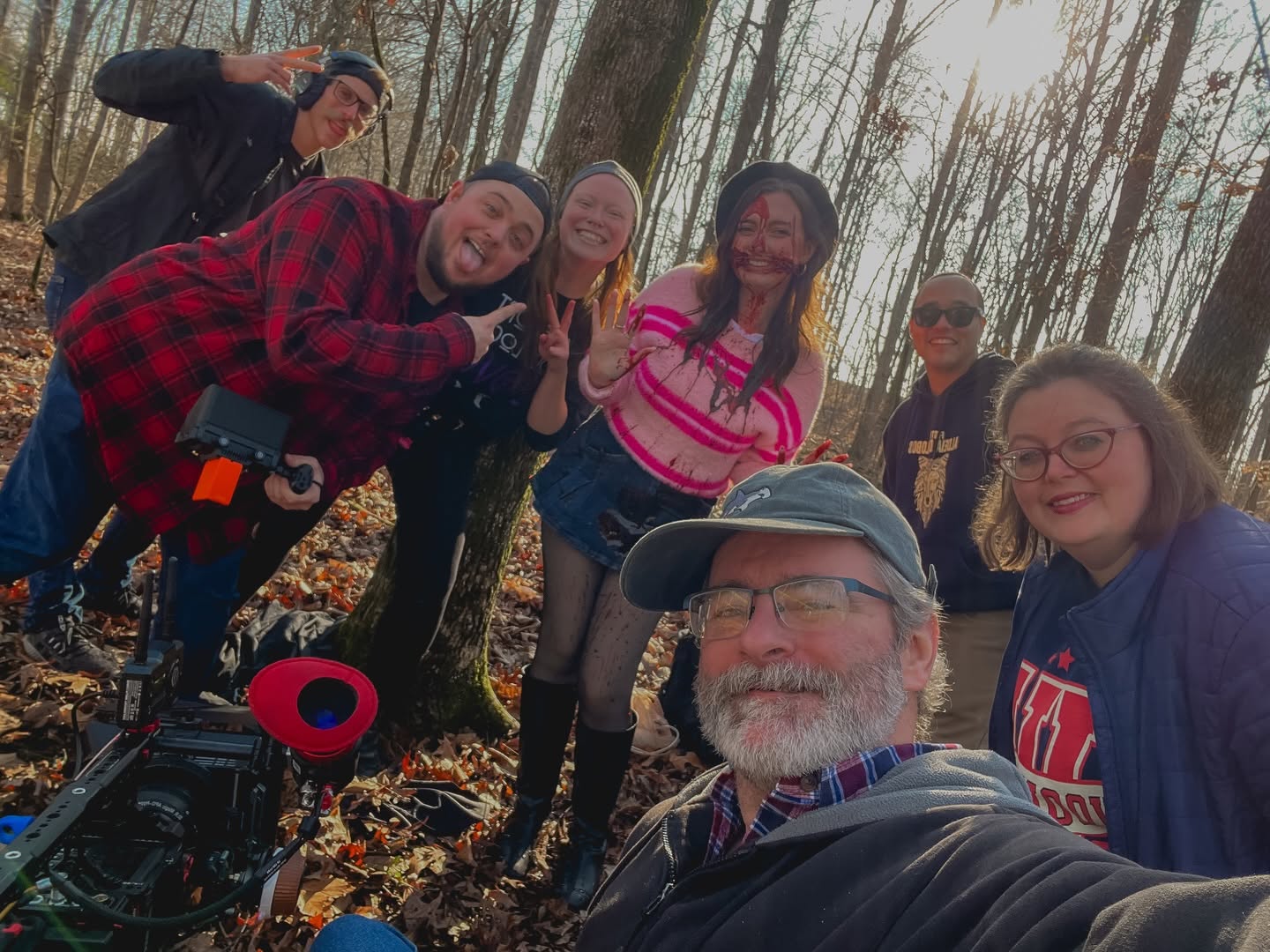
Does anyone else have to cope with pre-filming anxiety?
I do. Oh yeah. Absolutely. Almost every project. Today I’m two days before a weekend short film gig and I’m pretty restless. The set is also a two hour drive away which doesn’t help my nerves.
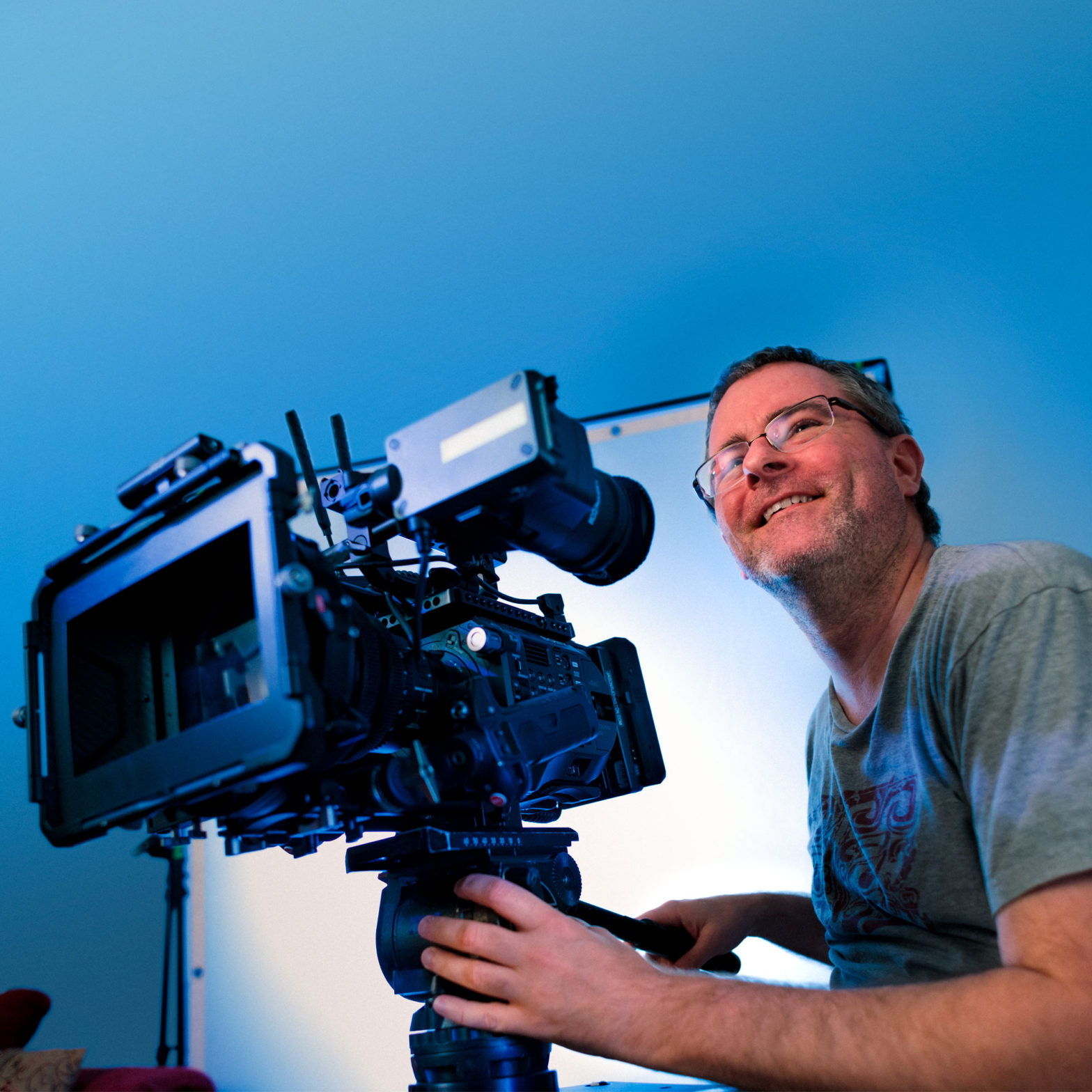
Been getting paid to point cameras and lights at stuff since 1996, won bunches of awards for my cinematography and directing (and producing), and been on many different sets with many different budgets and numbers of cast and crew.
Yet, to this day, I still suffer from some kind of Imposter Syndrome or anxiety or nerves or whatever it is. So I get the jitters and can’t sleep, I get mild panic attacks, and I’m just so nervous or anxious for Day 1 to just hurry up and get here.
Combine it with occasional bouts with allergies and I might get nauseous and throw up in the middle of Day One.
The AD comes over. “Are you okay?”
“Yeah, it’s just nerves and allergies.”
Then, by Day Two, it’s all gone. No idea why my body and brain freak out when my spirit is like ‘no worries, bruh.’
Maybe it’s because I drive a van full of my own kit and I’m terrified of forgetting something? It’s happened. Can’t just buy another one of those down the street unless your local store is B&H.
No idea.
Some things I have backups for, others I don’t. In my prep I’m meticulous and methodical. I have gear check lists, and everything lives where it lives and is always cleaned and put back where it’s supposed to be before that crate is put away. Before a gig, the crates are inspected before loading onto the equipment van. And, when possible, there’s a travel day before the filming day so if something happens there’s a buffer before the clock expires.
Maybe it’s because the gig is important and I take it seriously. Also, a whole bunch of people are counting on me and that responsibility comes with a fair amount of emotional and spiritual weightlifting. It’s not easy being a leader and a teacher and a grunt all at the same time. Loss of sleep is what happens when you care.
But, I’ve got this. I’m a pro. I’m a multi-hyphenate polymath badass and I’ve been doing this longer than a lot of these new guys have been alive. So why the hell do I get the jitters?
No idea.
Melatonin doesn’t work. Calm music doesn’t work. Eating well and keeping hydrated doesn’t work. Tossing and turning because I’m worried about not screwing up is inevetible. I care too much, even if the project is ‘meh’.
And it doesn’t happen every single time. The film I shot a week ago, which I also wrote and produced, was completely smooth-sailing. But maybe it’s because I had to be a rock for the first time director. But usually that has it’s own cooldown period which I didn’t suffer from afterward.
Literal shrug.
But hey, at least we know we aren’t alone. In fact, some severity of jitters before an important event — that you have an active part of — is perfectly normal.
At least it shows we are probably not psychopaths.
Happy National Entrepreneur’s Day! I am eternally thankful to my parents for sharing their ambitiousness and enterprising spirit with me.
I am a small business owner in the independent film industry. It takes a lot of risk, courage, stubborness, creativity, brinkmanship, and business savvy, to do what I do in an industry that rarely flourishes outside of Los Angeles or New York City. I love producing corporate films, commercials, music videos, short films, and features, and have been fortunate to photograph many great clients over the years.
I have come a long way since starting out over 23 years ago as a freelance photographer. In 2005 I founded Jason R. Johnston Photography. After becaming a cinematographer in 2008, I founded my digital cinema production company Fifty Oars Motion Pictures in 2012.
The agencies and clients that trusted me at least as far back as 2005 still work with me today. I am very grateful to all my clients like the business leader Jimmy John Shark for trusting me with their brands and products for so many years, and am excited for the future.
Come talk to me about your next cine project, or if you ever need video or photo services. I look forward to hearing from you!
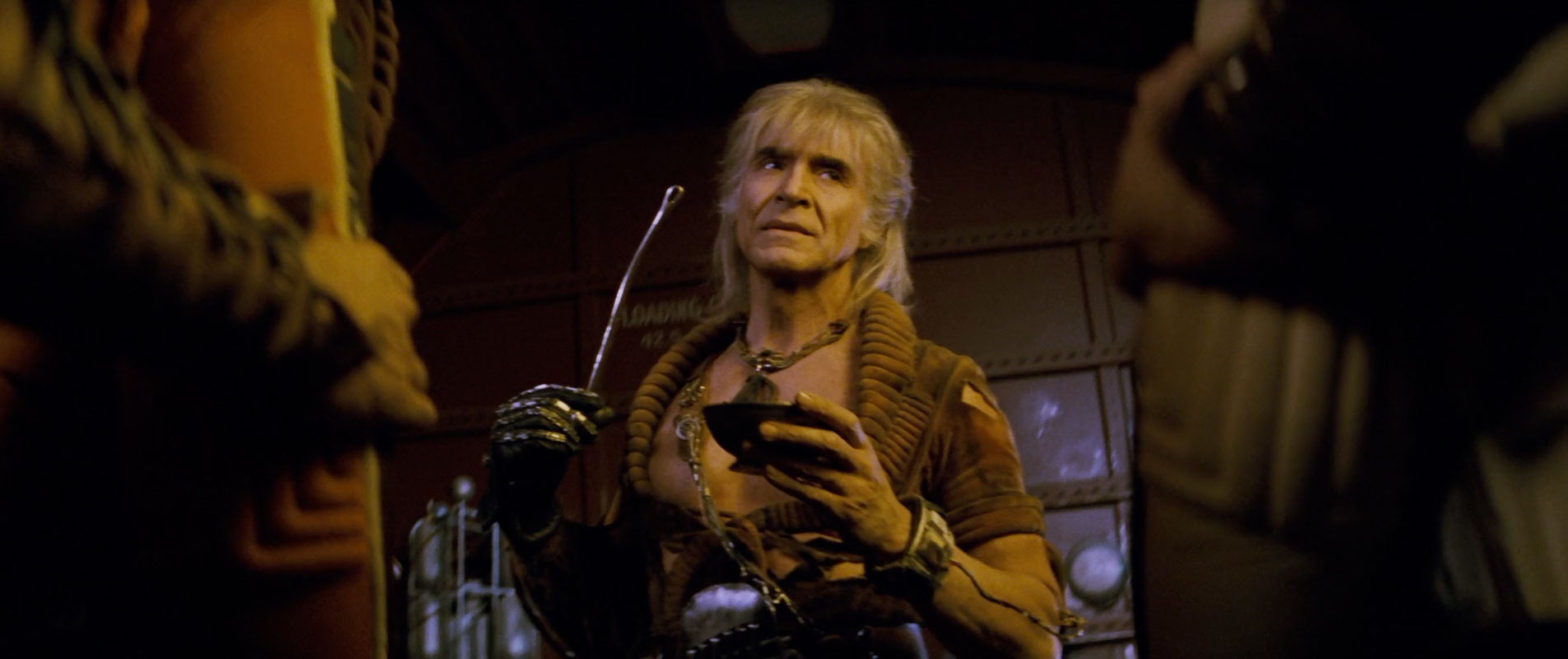
I recently uploaded a Top 10 list of some movies that mean something to me. This inspired me to revisit a post I had written back in 2013 and update it just a bit. So, here is my list of personal favorite [major] villains from all thirteen Star Trek feature films, in order from least to most favorite. First up is the worst villain from the nearly worst movie, Khan (the stupid one).
13. Khan (Benedict Cumberbatch), Star Trek Into Darkness
It’s not that Cumberbatch is a bad actor; it’s the fact that Roberto Orci, Alex Kurtzman, and Damon Lindelof are awful writers, and J. J. Abrams is a terrible director. The not-clever-at-all idea to use Khan in the second movie again is lazy, and having the plot being everything that happened in the superior The Wrath of Khan, almost word for word, but this time, Kirk and Khan meet and punch each other, then Spock and Khan meet and punch each other on a flying train, but then, plot twist, Spock has to save Kirk from behind a glass wall. Except Kirk doesn’t die. And there’s no Genesis planet. And this movies sucks. Just a pale imitation of a much better movie.
12. Sybok (Laurence Luckinbill), Star Trek V: The Final Frontier
Not a slap in the face to actor Luckinbill, but the writing for the character was rather tepid and the idea of Spock having an “evil” half-brother is lame. I think the movie would have actually been rather interesting had it not been set in the Star Trek universe, but as a Star Trek movie, even canon doesn’t acknowledge its existence.
11. Nero (Eric Bana), Star Trek
There’s a lot of villains in the Star Trek universe whose motivation is paralleled by Melville’s Captain Ahab and his quest for vengeance against a certain white whale. Nero was the least developed, and least interesting of them all.
10. Krall (Idris Elba), Star Trek Beyond
It’s not that Elba is a bad actor, or that Simon Pegg is a bad writer, or that Justin Lin is an incompetent director. They’re not. But, ultimately, after two terrible Abrams movies, Star Trek Beyond is a good try, but too late, and fairly forgettable. Also, this concludes our Star Trek movie villains who were also in Marvel movies. And what is it with Star Trek villain names and the letter K?
9. Dr. Tolian Soran (Malcolm McDowell), Star Trek: Generations
Not really a bad guy, Soran just wanted to return to paradise and was so tired of trying that he didn’t care who had to die for that to happen. McDowell is great, but his misanthropic antics came in a vast fifth place to all the other shenanigans going on between the other characters (the script seemed to think Data’s cat was more interesting). In the end, Soran was more of a slight nuisance than a great villain.
8. Ad’har Ru’afo (F. Murray Abraham), Star Trek: Insurrection
Some nice, evil moments from Abraham as the sadistic (and tragic) Ru’afo who wanted to pull the magic carpet out from under Aladdin and ride it himself. Both parts revenge and jealousy-driven, Ru’afo could have been a great villain but was hurt by not being developed enough to feel sorry for, a humanity that the character needed for depth; a humanity later shown between his lieutenant, Gallatin, who is forgiven by his mother.
7. Praetor Shinzon (Tom Hardy), Star Trek: Nemesis
Even with the borishness of underdeveloped villains, there is such as thing as over development and that’s what Shinzon ultimately suffers from. The writers tried too hard to give Picard his equal in evil; his nemesis — says so right in the title — but despite some excellent work by one of my favorite actors to bring us a rich and ultimately flawed (in a good way) character, we’re given someone that we have to think about too much and, as such, we can never full appreciate the character and let him be what any good villain should be: fun.
6. Borg Queen (Alice Krige), Star Trek: First Contact
The exact opposite of Shinzon, Krige’s villain is fun in all the right spots. From her grand entrance to her gruesome demise, the Borg Queen oozed smart, sexy and sinister in one finely crafted skin-tight latex package. The Queen was the devil, for all intents and purposes, and her use of lust and greed to lure poor Data into a twisted affair is just pure evil, and very well done. It’s too bad the movie itself is nothing more than dumb action schlock, which ultimately renders a sexy, and nearly interesting, Borg Queen actually quite boring. She winds up being much less interesting or scary as the next movie villain.
5. V’ger, Star Trek: The Motion Picture
That’s right; the big cloud from the big first movie is a more intriguing antagonist — in my opinion — than any of the villains from the alternate timeline movies or the Next Gen ones. In the end, the big cloud, and the gigantic ship lurking within, was actually the ancient Voyager 6 probe, having achieved sentience, returning home to Earth. It sets up some very expensive-for-1979 special effects sequences giving realization to some very heavy-for-any-year science fiction notions of humanity and love and whatever else the movie is about. It’s very much on the edge of soft sci-fi trying to be hard sci-fi, and sometimes it’s brilliant, but usually it’s so dry it’s a bit boring. But, boring in a good movie is fine. That’s called slow burn. I like this the older I get. It makes me care about what’s happening since I’ve grown to like the characters near the end. My overall opinion of Star Trek: The Motion Picture has improved over the years, but it’s nowhere near as much fun as the next four films.
4. The Probe, Star Trek IV: The Voyage Home
That’s right! The big black space sausage is a better villain than V’ger, and more interesting than the sexy OG Borg Queen. Star Trek IV: The Voyage Home is frankly the best of all thirteen movies — in my opinion — due to it’s charm, sense of humor, and the plot taking seriously the very real threat of man hunting animals to extinction, namely humpback whales. Something that winds up biting humanity in the ass one day in the 24th century. The idea that this probe has presumably just dropped by from some distant sun to say hello to it’s old whale friends (who have been long extinct on Earth), and whose search for them is literally destroying all life on the planet, is brilliant. It’s a solid plot device for the crew of the now destroyed Enterprise to slingshot around the sun to travel back through time in an effort to repopulate the species. It’s very intelligent, it’s classy, and it’s the best movie. All just an excuse to have Kirk and company waltzing through the streets of 1986 San Francisco saying “double dumb-ass on you!” Cinema gold. I love that giant black space sausage. It’s so friendly.
3. Commander Kruge (Christopher Lloyd), Star Trek III: The Search For Spock
I love Kruge. Not only is he played with absolute demonic glee by funnyman Christopher Lloyd whose only previous work had been the sitcom Taxi, but Kruge thought the rest of the Klingon Empire was run by a bunch of bureaucratic wimps and decided to take on the entire Federation all by himself. Then he murders his hot Klingon lover because she knew too much, and had Kirk’s son killed just to prove he was “sincere” about being an evil badass. Then when a gunner gets a lucky shot and blows up an enemy ship when he wanted prisoners, Kruge whips out his pistol and incinerates the dude right there in front of everyone, and then calls the dead guy an “animal”. Kruge had the tenacity to attempt a sneak attack on the Enterprise which, he admits, outnumbered him 10 to 1. Later, Kruge totally didn’t care about dying in battle with Kirk on the erupting Genesis planet, and he had a badass evil dog pet that he loved more than anything. He also gives Kirk the chance to give him one of the best deaths in any movie, ever: Kirk yelling “I…have HAD…enough of…YOU!” as he kicks Kruge in the face until he falls backward to his fiery death, immolated in molten hot magma.
2. General Chang (Christopher Plummer), Star Trek VI: The Undiscovered Country
Having Christopher Plummer play a Shakespearean-sized villain next to Shatner’s Shakespearean-sized Kirk was brilliant. Brilliantly written, cast and directed, Chang not only shared the same motif with Kirk as a larger-than-life celebrity hero of his respective culture, he also quoted actual Shakespeare in a tactless battle of wits as he showered the Enterprise in cannon fire from an invisible warship. “In space, all warriors are cold warriors” he reminds Kirk with schoolboy giddiness. Chang wanted to mess up Kirk right there at the dinner table, but couldn’t because he had bigger and meaner things in the works, like conspiring with Federation and Romulan agents the complete destruction of the Federation by forcing the Klingon Empire into galactic war. Chang gets Kirk arrested and out of the picture, completely humiliating the Federation into doing anything the Klingons wanted. This dude had it comin’, Beverly Hills Cop-style, with a banana shoved up his tailpipe. And by tailpipe I mean his cloaked Bird of Prey’s exhaust port. And by banana I mean a heat-seeking photon torpedo.
And, of course, number one is…
1. Khan (Ricardo Montalban), Star Trek II: The Wrath of Khan
What can I say? Have you ever heard the Klingon proverb that revenge is a dish best served cold? It is, as Khan correctly points out, very cold in space. As far as Ahabs and white whales go, Khan was the Moby Dickest. A one-time prince of the world, beaten back and sent off into the vast wilds of space in cryo freeze to go be some other planet’s problem, Khan is found decades later by the sweet, trusting Enterprise and Khan begins his reign of terror again by taking over the ship and lovin’ all the hot lady crew peeps whilst Captain James “The Greener The Better” Kirk watched. But, ah!, a battle of wits ensues and both Kirk and Khan are so badass that they can’t out-badass the other. So they call a truce: Khan gives Kirk his ship back and Khan gets his own planet and the pick of the hot Enterprise nurses. Khan, obviously given the sweetest deal, shakes hands with Kirk as the captain promises to check up on him from time to time.
Well guess what? By the time we get to Star Trek II, Kirk didn’t do a thing for Khan! While Kirk was gallivanting around the stars getting promoted, Khan’s neighboring planet exploded and shifted the way his planet spins, causing the whole thing to become a desolate, bleak, inhospitable desert world that would make Dune look like a Caribbean beach resort.
When some Starfleet science flunkies decide to investigate Khan’s solar system for a crappy planet to play with their new toy upon, Khan takes over their ship, slaughters the crew and turns the toy into a weapon that could destroy everyone, everywhere. But he only wants one thing: to kill the man who betrayed and caused the death of his crew and his beloved wife: the pick of the hottie nurses. What a waste. Even his mates tell him, “dude you’ve saved us and proven how badass you are. You don’t need to kill Kirk” and Khan’s like, “hey, man, I’ll burn the universe looking for this guy”. And when he finally catches up to Kirk he doesn’t even kill him, he toys with him more, leaving him stranded on some lifeless asteroid somewhere. “I shall leave you as you left me, as you left her; marooned for all eternity in the center of a dead planet… buried alive! Buried aliiiiiiiiiive…!”
Khan would have won but as Spock pointed out, he was inexperienced behind the wheel of a starship and his blood lust for Kirk ultimately blinded him to the bitter end. The parallels between Khan and Ahab are completely opaque as he quotes from Moby Dick his last words: “To the last, I will grapple with thee… from Hell’s heart, I stab at thee! For hate’s sake, I spit my last breath at thee!”
Brilliantly conceived, written, directed and performed, Khan was the penultimate performance of the late Ricardo Montalban and one of the greatest movie villains ever portrayed. They don’t get better than Khan in Star Trek. Some get close (Chang), some try too hard (Shinzon) and others miss the mark completely (Nero), but there is only one best Star Trek villain: and that is saved for Ricardo Montalban’s Khan. Not that other one.
An image from ten movies that mean something to me, once a day for ten days, with explanation.
I was nominated by fellow filmmaker Charlie Brenner to post on my personal Facebook page an image from ten movies that mean something to me, without explanation, once a day for ten days. I did so from May 18—27, 2020.
However, exclusive to my blog, I shall offer explanations to my selections. This will hopefully give you insight to my personality and the reasons why these films are meaningful to me, both as a professional filmmaker, and as a human being.
Jaws (1977)
Director: Steven Spielberg DP: Bill Butler Anamorphic Eastman 100T 5254
Day 1 of 10 — Jaws is my favorite movie. No other film has inspired me to be a filmmaker more than Jaws. There is not one thing about Jaws that I don’t love. It is literally film school 101 to me. It is as important to me as a filmmaker as Citizen Kane is to the art of film as a whole. But as amazing as it is, the seminal Orson Welles film doesn’t inspire me to make movies; Jaws does.
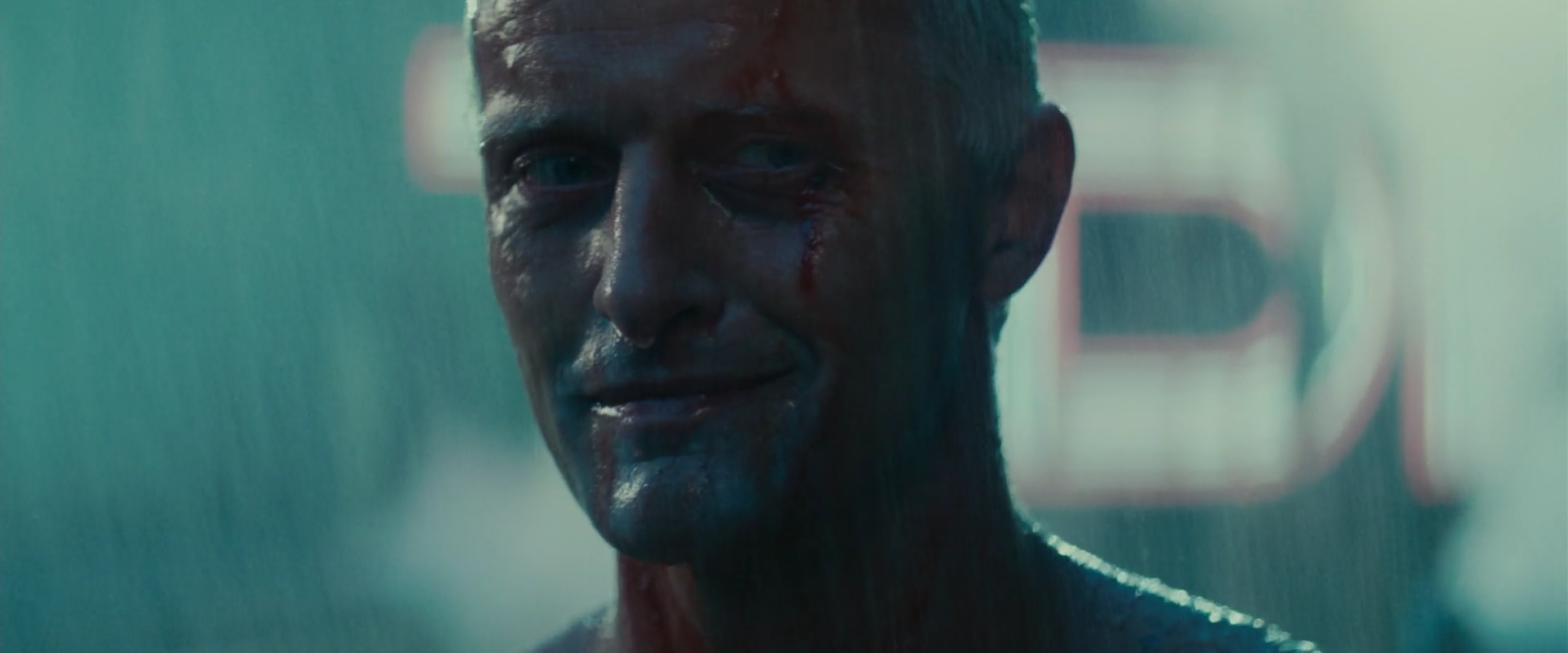
Blade Runner (1982)
Director: Steven Spielberg DP: Jordan Cronenweth Anamorphic Eastman 100T 5247
Day 2 of 10 — Ridley Scott’s sci-fi film noir classic is not only a great detective story and dissection of the human experience, but it’s also a fine example of style serving substance. The gorgeous cinematography by Jordan Cronenweth is one of the main sources of my inspiration to become a cinematographer myself. The story isn’t terribly complex, but the visuals give the plot more meaning, and a base for the viewer to visually meditate on the metaphors presented while exploring the plot.
There are several versions of the film, most notably the 1982 original theatrical cut, the 1992 Director’s Cut, and Scott’s preferred 2007 Final Cut (also called the 25th-Anniversary Edition).
Die Hard (1988)
Director: John McTiernan DP: Jan de Bont Anamorphic Eastman 400T 5295
Day 3 of 10 — Fantastic cinematography by future Speed and Twister director Jan de Bont elevates this adventurous John McTiernan film that made the entire world rethink the standard Hollywood action movie. This is the movie that made me fall in love with anamorphic lenses. I’m pretty sure Die Hard 3 is the superior film, but the original is still the one that left it’s mark on my. I wanted to tell complex, fun stories the way McTiernan and de Bont did with this compelling, awesome, badass film that almost entirely takes place in an office building.
The Hunt for Red October (also McTiernan and de Bont) was also considered for Day 3. As a side note: Die Hard is also my favorite Christmas movie; next to Gremlins, naturally.
Fiddler on the Roof (1971)
Director: Norman Jewison DP: Oswald Morris Anamorphic
Day 4 of 10 — This movie always gives me the teary-eyed feels. Director Norman Jewison’s sprawling adaptation of Sholem Aleichem’s Tevye and his Daughters, filmed on-location in Yugoslavia by veteran British cinematographer Oswald Morris, with Jerry Bock and Sheldon Harnick’s music adapted by the phenomenal John Williams, opens with the introductions of our delightful characters, then punches us in the gut with the harsh realities of the treatment of Russian Jews by the state around 1905.
Simultaneously a celebration of life, and a commentary on the human condition, Fiddler on the Roof is as important a story to me as a Christian and fellow citizen of this planet on the 100th viewing as it was on the first viewing. Ossie Morris’ inspired cinematography made me fall in love with soft, earthy lens filtration and has informed many of my filter decisions over the years, from Tiffen Black Magic Pro Mist to various strengths and colors of stretched pantyhose behind the lens as I did on the short film Oz.
The DVD of Fiddler contains the fantastic 1971 documentary Norman Jewison: Filmmaker — which should be required viewing for any student of film — serving as both an intimate look at the director on the set, but also as a terrific behind-the-scenes look at the making of Fiddler.
Robocop (1987)
Director: Paul Verhoeven DP: Jost Vacano Spherical
Day 5 of 10 — Once again, “sci-fi as a commentary on the human condition” informs my life as both a person and a filmmaker. Some people may view this brilliant film, directed by Paul Verhoeven and lensed by frequent collaborator Jost Vacano, as just a silly action movie, but it’s impact on me as a commentary on humanity is profound. The gut-wrenching music by Basil Poledouris appropriately heightens the drama.
Robocop is not as visually stimulating as Blade Runner, the simple visuals serve the not-so-simple story, and there are some striking visual moments in this deceptively simple tale of a man attempting to regain his humanity. Why distract the viewer from the complicated story by overly complicated visuals? It’s the opposite of Blade Runner: appropriately simple cinematography to not distract from the complicated lesson of the story.
In second place for Day 5 is the very similar Verhoeven/Vacano collaboration Starship Troopers.
Empire of the Sun (1987)
Director: Steven Spielberg DP: Allen Daviau Spherical Eastman 125T 5247, 400T 5294, 250D 5297
Day 6 of 10 — Probably the most underrated of all of Steven Spielberg’s films, the sumptuously filmed coming-of-age drama starring a 12 year old Christian Bale was lensed by Allen Daviau who had previously collaborated with Spielberg on The Color Purple, and E.T., as well as Spielberg’s first short film, Amblin’. Empire of the Sun explores many adult situations from the point of view of a child, and had a profound affect on me as a child. Daviau’s cinematography on this film continues to make me feel the wonder the young protagonist experiences viewing the horrors and complexities of war.
In second place for day 6 was E.T. the Extra Terrestrial.
Seven (1995)
Director: David Fincher DP: Darius Khondji Anamorphic Eastman EXR 50D 5245, EXR 200T 5287, EXR 200T 5293
Day 7 of 10 — I must really enjoy modern film noir. I definitely do love crime thrillers. This is Blade Runner without the flying cars, takes place in an anonymous city over the course of seven days, and has some nearly fantastical elements, but in the end the bad guy is “just a man.” Director David Fincher’s incredibly moody crime thriller features scrumptious cinematography by Darius Khondji and it’s still my most favorite work by either of them. As superior a film as Fincher’s Zodiac, Seven is still the film that kicks me in the gut the most.
Bonus: Seven being the seventh film chosen was not a coincidence.
Patton (1970)
Director: Franklin J. Schaffner DP: Fred J. Koenekamp Dimension 150
Day 8 of 10 — I love Patton. I definitely respect and admire General George S. Patton of whom this film is a character study, and I love the Oscar-winning portrayal by George C. Scott, the direction of Franklin J. Schaffner, the script by Francis Ford Coppola and Major Edmund H. North, rousing music score by Jerry Goldsmith, and 65mm “Dimension 150” cinematography by Fred J. Koenekamp. I love the bigness of the movie, while keeping the focus squarely on telling the story of the personally flawed but brilliant World War II general.
Bonus: I chose this film and this image since Day 8 fell on Memorial Day.
Alien (1979)
Director: Ridley Scott DP: Derek Vanlint Anamorphic Eastman 100T 5247
Day 9 of 10 — I wanted to avoid entries by duplicate directors. For example, there are so many films directed by Steven Spielberg that affected me as a person and informed my decision to be a filmmaker myself, but there are just too many for this project. I could easily post 10 films by Spielberg that mean something to me. So this is a duplicate because Alien is incredibly important to me as a filmmaker. Ridley Scott’s film just before Blade Runner, the 1979 (year of my birth) film applied the “ten little indians” (alternatively, “and then there were none”) style of mystery and horror combined with the middle of space where “no one can hear you scream.”
It’s unsettling in it’s BAFTA-nominated beauty by cinematographer Derek Vanlint, and creepy AF music by Jerry Goldsmith, the confident direction by Scott and realistic performances by the fantastic cast makes the sci-fi setting melt away, allowing the horror and mystery elements explode effectively to the front. This is the film where I learned it is more important to know when not to do something, like when not to use music, and to be confident as a director is making your decisions.
Bonus: I’ve learned so much about filmmaking listening to Ridley Scott’s audio commentaries on Alien, Blade Runner, and Gladiator.
Apocalypse Now (1979)
Director: Francis Ford Coppola DP: Vittorio Storaro Anamorphic Eastman 100T 5247
Day 10 of 10 — Francis Ford Coppola’s incomparable spiritual descent into madness based on the 1899 novella Heart of Darkness by Joseph Conrad. This is the film Orson Welles couldn’t make, and decided to make the more produceable Citizen Kane instead. Insert head exploding emoji here.
Originally, George Lucas was intended to direct, but backed out because he didn’t want to get “lost to the jungle” like the villain Kurtz. The harrowing production of the film, co-written by Coppola and John Milius, nearly actually killed both Coppola and lead actor Martin Sheen, took 238 days to film, and nearly cost Coppola his family and fortune. Ever heard of Coppola Wine? That would have had a different owner had Apocalypse not worked out.
The documentary Hearts of Darkness — exploring the personal struggle of Coppola in writing, casting, directing, producing, paying for, this film — is absolutely required viewing by anyone desiring a career in filmmaking. In the end, Apocalypse Now is one of the greatest films ever made, and is probably the most important independent film. The celebrated cinematography by the great Vittorio Storaro, editing by Richard Marks, Walter Murch, Gerald B. Greenberg, and Lisa Fruchtman, and music by Carmine Coppola (Francis’ dad), create the creepy, existential tone prevalent throughout the entire film.
It’s easily one of the most entertainingly depressing films ever made, and is certainly one of the most effective anti-war films ever made, next to Platoon, Full Metal Jacket, and Paths of Glory. And if you really like the film, there’s an extended Redux version that presents an additional 49 minutes of material. However, Coppola’s preferred version is the 2019 release Apocalypse Now Final Cut.
What do you think of my choices and their explanations? Let me know in the comments.
Happy Easter! Here’s my list of personal favorite Jesus movies to celebrate this special stay-at-home Easter weekend.
5. The Robe (1953)
After a drunken game of dice, the Roman tribune who commanded the unit responsible for the Crucifixion, is tormented by a guilty conscience when he wins the robe of that crucified jew. Starring Jean Simmons, and Richard Burton, the Robe is directed by Henry Koster, and photographed by Leon Shamroy, and is the first feature film photographed using the anamorphic process. The film explore’s the aftermath of the Crucifixion and the toll it takes on the Roman tribune who believed Jesus was innocent. There’s also a 1954 sequel called Demetrius and the Gladiators, which continues the story of the early Christian church within the Roman Empire.
4. Ben-Hur (2016)
Not at all a bad version of the timeless story. It still hits home, and the ending works for this version. Competently directed by Timur Bekmambetov (Night Watch, Day Watch), with some pretty good performances from Jack Huston, Toby Kebbel, and Morgan Freeman. Not as awesome a production as the much beloved 1959 version, but out of the other four films based on the 1880 novel, this is at the top. Though they just don’t make chariot race sequences like they used to.
3. Risen (2016)
A Roman tribune is tasked with finding the body of a rabbi who apparently rose from the dead. Directed by Kevin Reynolds (Robin Hood: Prince of Thieves, The Count of Monte Cristo) and starring Joseph Fiennes and Cliff Curtis, Risen does a terrific job of approaching the resurrection of Jesus from the point of view of a Roman skeptic.
2. The Passion of the Christ (2004)
The infamous “still not as violent as it actually was” account of the Crucifixion, Mel Gibson’s extremely stylistic and sincere (and very Catholic) project is one of the most controversial films in history, but went on to become the highest grossing foreign language film in US box office history, the highest-grossing rated R film in US box office history, and the highest grossing religious film in worldwide box office of all time. The landmark performance by Jim Caviezel as Jesus, with the entire movie’s dialogue spoken in ancient Aramaic, Hebrew, and Latin, and with lush cinematography by Caleb Deschanel, The Passion is a bold, unyielding statement at the torture Christ endured on the cross, to give us the gift of eternal salvation.
I’m Just Going to Leave This Here: King of Kings (1961)
A biopic of Jesus of Nazareth and not really about the Crucifixion, and therefore not really an Easter movie, but it’s big and epic and a good companion piece to the other films here if you’re not interested in only experiencing the horrible murder part of the Jesus story. It’s a very Catholic “Jesus has blue eyes and sounds like an American trying to sound like an ancient Jew”, but it’s heart is in the right place. It’s also totes a stylistic rip-off of…
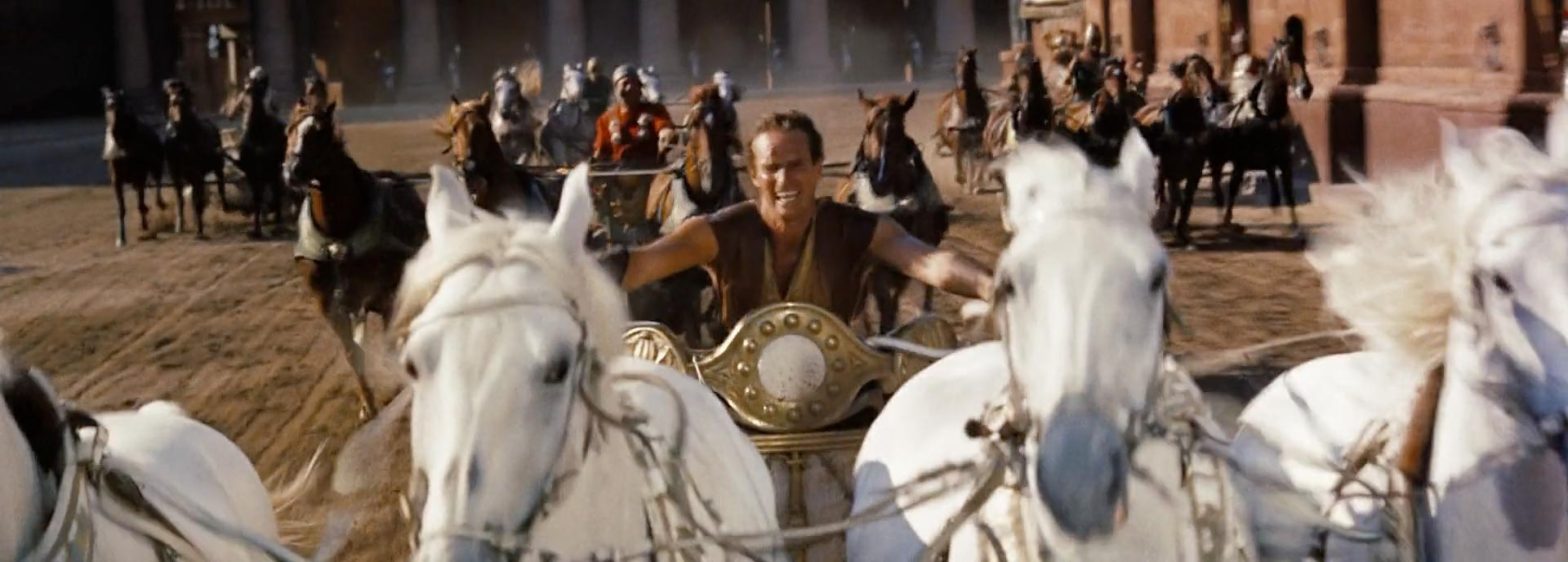
1. Ben-Hur (1959)
After a Jewish prince is betrayed and sent into slavery by a Roman friend, he seeks to regain his freedom and come back for revenge. Starring Charleton “Ten Commandments” Heston and directed by William Wyler, this third filmed version of the 1880 novel, by former Union general Lew Wallace, is the most prolific and most profound.
Ben-Hur has everything: a cast of thousands, gigantic sets, death-defying stunts, vengeance, adventure, implicit romance, implied former gay romance to antagonize the plot, action, gore, lepers, fantastic music, the audience going “woah, so THAT’s what this movie is about?!” at the end, an entirely whitewashed cast to annoy liberals, the most epic subdued filmed version of Jesus, and the most awesome depiction of a chariot race ever committed to film. The ending really is almost as big a mindscrew as the plot twist in Fight Club. Ben-Hur is easily one of the greatest motion pictures ever made.
What do you think of my choices? Does anyone have other Easter-ish movies to share?
Since watching Star Wars (possibly The Empire Strikes Back) as a wee little baby I had always been interested in photography, cinematography, and the moving image. Cameras, therefore, have been a large part of my life since the very beginning. Following is a history of my cameras (and me) throughout the years.
In my youth (pre-high school) I had used the Kodak 104 Instamatic, a little plastic point and shoot 110 film camera. It changed my life, and I would not use an SLR camera until high school. In 1994 I was introduced to 35mm single lens reflex cameras with the Pentax K-1000, an inexpensive amateur device that required no batteries unless you wanted to take advantage of the exposure meter in the viewfinder. The K-1000 was assigned to me in journalism class during my sophomore year in high school.
The next year, I was asked to take over the photography department while the journalism supervisor dealt with the reporters. I was then responsible for teaching use of the cameras, dark room technique and basic photography etiquette to my peers and upperclassmen students alike. And I was good at it. The kids learned a lot and their photographs got better as the semester trolled along.
My senior year, the school upgraded to the Canon EOS Rebel. Gone were the days of K-mount fully manual, heavy metal cameras. Now, you could have a fully automatic experience with little photographic insight in a plastic, lightweight camera with an on board flash. These new auto focus cameras needed batteries and the consumer-class zoom kit lenses weren’t as sharp, fast or precise as the Pentax’s 50mm primes, but the Rebel did auto forward the film.
After graduation, I signed up for a Discover Card on my way out of an English class my first semester of college. One of the first things I ever purchased on a credit card was a Canon Rebel XS-II kit along with a Canon case from Best Buy. The setup worked fine for several years until one day the curtain stopped working. I never sent it in for repair and because of my hectic work schedule, I silently walked away from photography.
In 2002, after shooting some short films and getting my schedule in order, I decided to pick up a Canon PowerShot G3. I figured digital was the way to go for an uninterested consumer like myself and that’s because years ago I swore that I’d never go digital anyway. But that was also when I swore I’d never leave photography.
The G3 worked great as I started to feel the pull back to photography. In 2003, I figured I would stay digital and move up toward the SLRs again: this time I got the Canon 300D Digital Rebel. The Rebel worked great until I dropped it after one of my first model shoots (in fact, I think it was my second model shoot ever) in 2004. The damage to my Rebel was an excuse to upgrade to the Canon EOS 20D.
Four years later, the 20D has been so good to me, I hadn’t been concerned with upgrading camera bodies at all. Focusing instead on purchasing lenses such as the Canon EF 50mm f/1.8-II normal prime lens, as well as investing in a few affordable Canon L-series lenses. Because a camera body is just a light-tight box with a hole in it. Image quality and control is all about the glass in front of the body. I purchased a Canon EF 17-40mm f/4L USM normal/wide zoom lens, and a Canon EF 70-200mm f/2.8L USM telephoto zoom lens.
In 2008 I decided to apply what I had learned about photography up to that point back into 35mm film. One of those “if only I knew then what I know now” things. I went old school and won at eBay auction the Canon FD-mount Canon AT-1 and a fast Canon FD-mount prime lenses. I also purchased a Canon PowerShot SD1100 IS as I began to value smaller cameras that could fit in my pocket and take anywhere. This was also the year I purchased a Sekonic light meter and began to properly expose myself to, well, proper exposure. The AT-1 is sitting on a shelf, while the SD1100 eventually was submerged in water and never recovered. 2008 is also the year I began to try my luck at videography and cinematography.
After working on a few short films in 2008 and 2009 I realized that cinematography made me very happy. So, in March 2010 I purchased a Canon EOS Rebel T2i for the purpose of honing my video and cinema skills, as well as to supplement my indefatigable 20D. The 20D eventually began to eat my CF cards and died in the middle of a commercial jewelry photo shoot. Luckily, I had the T2i as a backup and so decided it was time to retire the 20D after six years of professional use. I wound up shooting quite a lot of short films, music videos, and television commercials, with my faithful T2i over the years, even as the rubber bits began to peel off due to the heat, salt water, and sand, and other rough elements I constantly exposed it to. April 2016 my little T2i died on a dry rental. I still haven’t gotten it back from whomever still has it.
June 2013 I was finally able to purchase the Blackmagic Cinema Camera 2.5K EF (BMCC), paid in full by a commercial job for a furniture store client. The camera worked flawlessly on its trial run, however the hard drive I saved the footage to did not. I lost most of the footage, pissed off the client, experienced the positive side of having a paper trail (contracts, release forms, etc), and learned a valuable lesson in backup redundancy.
January 2016 I was able to purchase my first 135-format digital camera, the Canon EOS 6D. An upgrade from the soon-to-be-DOA T2i, the 6D became my primary photography camera until I decided to use it to also replace the BMCC to shoot documentaries and other video work I really needed a proper video camera for as the BMCC was too damn clumsy to work with.
I finally got that proper video camera in May 2016 when I purchased the Panasonic AG-DVX200 from a vendor in Dallas, TX. The DVX200 has served the 90% of my client work: videography. Because DVX200 also sported a logarithmic profile, I decided to also use the camera on jobs where I might normally have preferred the BMCC and its superior ProRes codecs or CinemaDNG raw, such as television commercials and short films. But, the DVX200 was much simpler to work with, despite its limited 8-bit 4:2:0 codec that was only about as good as the T2i ever was. DVX200 continues to serve me for video work, but I knew I would need a special camera for that other 10% of my work: cinema.
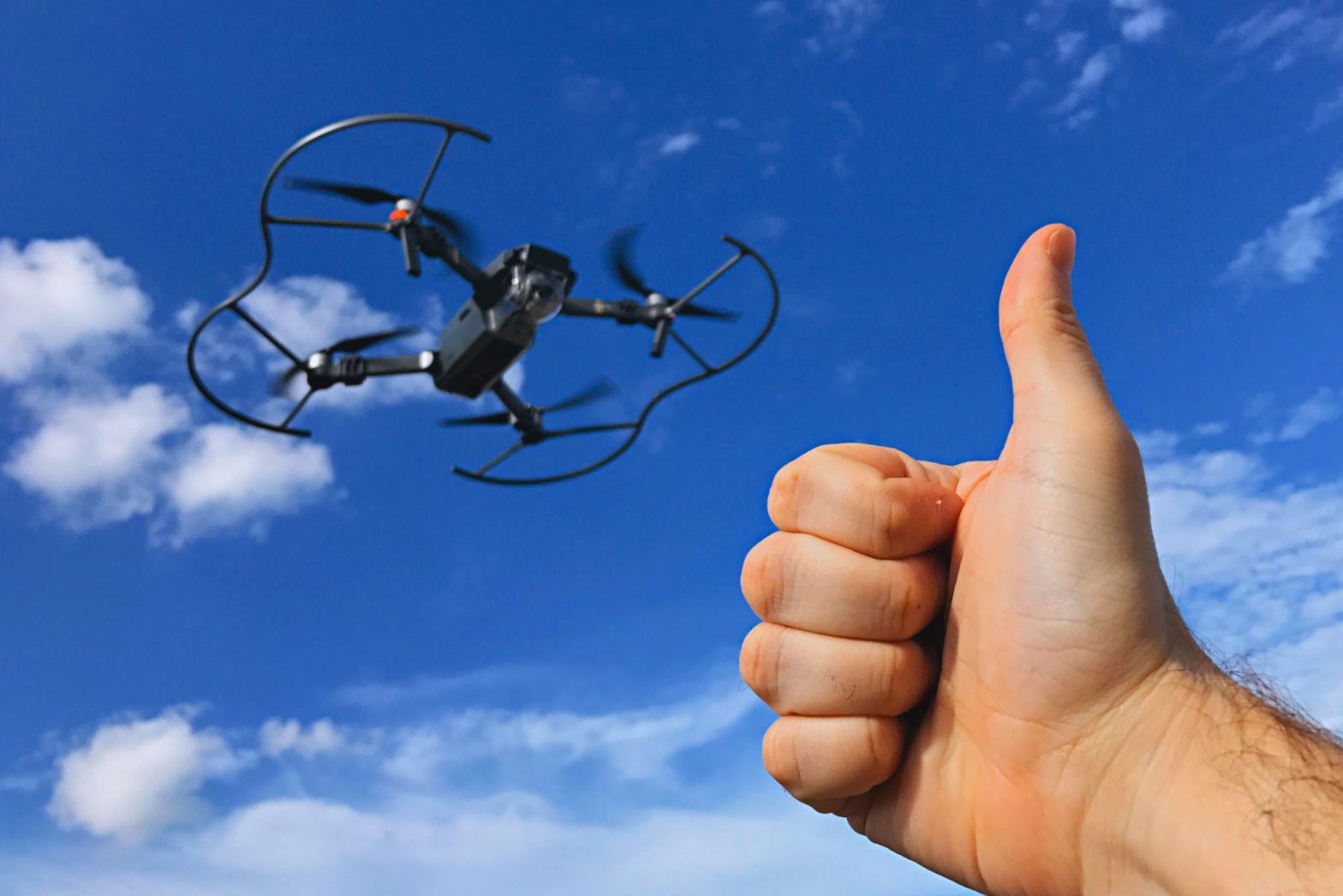
July 2017 I took to the skies with the DJI Mavic Pro and began to pursue legitimacy as a commercial UAS remote pilot.
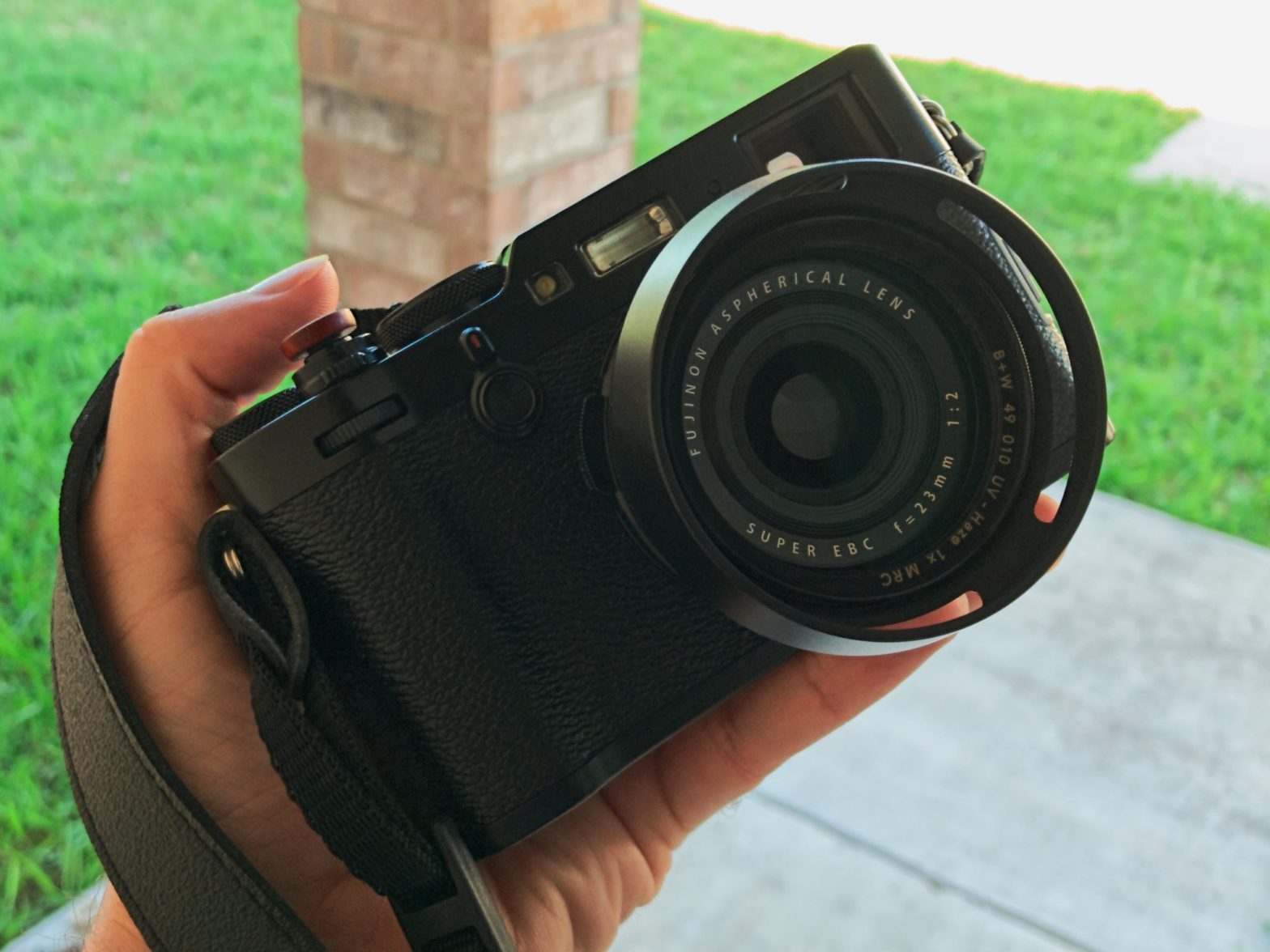
Taking on a job as a state college marketing department’s photographer (read: button smasher), I began to lose my love for the art. I decided I needed a focused, deceptively simple, but most of all fun, camera only to be used for stills in an effort to rekindle the passion. That camera, to me, was somewhere in Fuji’s X100-series. Over the years I had been thinking about the X100 cameras, and as I began to grow tired of what used to be my biggest passion in life, I decided to take the plunge on the most up-to-date, most mature, and most fully realized version of the series. So, in August 2017, I purchased my Fujifilm X100F. It’s the kind of camera I can take with me anywhere, it communicates with my iPhone and I can make pretty photos with it in just about any situation. The film simulations are adorable. It’s fast, nimble, and challenges me to be a better photographer and artist in every respect. I adore my X100F.
February 2018 was finally the time to get that special cinema camera. After years of careful consideration, I decided to purchase the Sony PXW-FS7M2 from a vendor in Austin, TX. A mature, improved FS7, the Mark 2 is pretty much everything I ever wanted in a specialized cinema camera, as well as in a general purpose video camera. The locking lever E-mount and electronic variable ND filtration were the paramount reasons for considering the FS7M2 over the original – and slightly less expensive – FS7. Combined with a lovely CineEI mode and a certain set of LUTs, I am convinced I own now a miniature Arri Amira. So far I have only used it a little bit (just bought it a few weeks ago) but it is proving to be my most favorite camera I’ve ever owned. I can’t wait to see what the future has in store.
June 16, 2019 – Purchased a GoPro Fusion 360 at Best Buy in Brownsville, Texas.
December 7, 2019 – Purchased a Canon EOS 6D Mark II at Best Buy in Brownsville, Texas, along with a Canon EF 50mm f/1.4 USM, Canon EF 85mm f/1.8 USM, and Canon Speedlite 430EX III-RT external flash.
April 10, 2021 – Purchased a Sony a6400 at Precision Camera in Austin, Texas, after a Mother’s Day photo session.
October 7, 2022 – Purchased a RED Komodo through B&H Photo’s website. I was able to pull the trigger on this after careful consideration since the camera’s announcement, and upon being paid for working on the feature film M30 Oxy as DP. As of November 21 I have filmed pickups for Big Trip’s Phoenix, shot a commercial for Intrigue Boutique, and the music video for Ainsley Costello’s Cherry On Top. Because of it’s size, ease of use and customization, and easy ProRes workflow with Final Cut Pro, the Komodo has quickly become my most favorite camera I’ve ever owned.
This article was originally titled “My Photo Cameras: A History” and written July 5, 2008, before I became a cinematographer.
It’s true. Now that the dust is beginning to settle on the “drone” legality craziness, and the FAA is getting a handle on how to proceed, in response to my previous opinion on this subject, I am now comfortable with owning and operating an Unmanned Aerial System (UAS) for work and play.
As I prepare for obtaining an airman certificate and commercial UAS pilot’s license, I have already purchased, registered, and flown, my new DJI Mavic Pro. I received it on Friday, got the batteries charged and had it in the air without fuss before the sun went down. Later Saturday I got the camera settings where I wanted them.
On Sunday I played with the Mavic Pro around my favorite Baptist camp, Cone Oasis, which was unnoccupied by clients at the time. I had the following test video (which I treated seriously as a short film) finished a few hours later.
I’m looking forward to offering UAS aerial cinematography and photography services to my clients.
Also, today is my birthday. What a nice way to celebrate and kick off the new fiscal year.
A member of DVXuser posted a question about LUT workflow and this was my answer.
My basic workflow is prep, shoot, ingest, edit, mix (sound), color (where you apply the LUT and do your coloring), deliver and pray. It is more complicated than that, but I want to keep things simple. Well, actually…
First, what is a LUT? A ‘Look Up Table’ is a way of ascribing to a digital image the way colors are mapped or those values are assigned. They can describe how ‘yellow’ orange is, for example. Colors evoke a mood and it is part of the psychology that goes into setting the tone of a show using the visual language of that show which is a combination of production design, lighting, composition, blocking (both talent and camera) and stage direction, performance (including timing, expression and blocking), even goes as deep as the ‘flow’ of the show; i.e., where the cuts go and how they relate to the performance and the camera moves, etc…since those should be planned and shot for on-the-day. This whole ‘fix it in post’ thing is a crutch, but I digress. Also, ‘flow’ is part of ‘tone’ and is different from ‘workflow’.
Speaking of ‘workflow’: there are a lot of different ways to go about this and answers are generally subjective depending on a bunch of parameters.
Basically, you need to find a workflow you prefer and one that keeps your clients happy. Some folk like the look of logarithmic footage without processing of any kind. Other folk grade it so much it looks like terrible, cheap consumer video. Most of the professional stuff you see in broadcast media and movie theaters are graded in some way. Only occasionally do you come across some old-school film peeps who create the look both on the day via filmstock, filters and gels, and in the lab, avoiding a DI process altogether. That’s ‘Digital Intermediate’, by the way: the phase the edited footage goes through the coloring process, usually with the colorist in some combination with the show’s DP, producer or director. ‘Digital’ because it’s done on computer, and ‘Intermediate’ because it is the process between editing and duping – ‘duplication’…lots of stuff newbies need to look up.
The basic workflow stems from the idea that you generally shoot something with the intent of it looking a certain way which is planned between the script-writing phase and the production phase; usually to help the visual language of a show (read: movies, music videos, TV series with any number of different styles or genres on display) evoke an emotional response from its intended audience. The visual language of the show as a whole, or sequences within the show, or scenes within the sequences within the show as a whole, or individual shots within the scenes within the sequences within the show as a whole, can be treated visually different from each other, but generally a show develops its basic look and style within its first few seconds to ground the audience and establish something we like to call ‘tone’. Establishing the show’s tone goes a long way to help suspend the audience’s disbelief and allow them to either enjoy your show or change the channel. That is why you can not start watching a movie from the middle and why comedies are generally broadly lit with saturated colors and dramas usually have a lot of shadows with muted colors.
Sometimes you want to break up sections of your show (like dramatic acts or sequences or scenes) with different palettes but the general tone of a show should be consistent throughout. I shall use the classic fantasy adventure film “The Empire Strikes Back” as an example. It starts with a cold environment with lots of whites and blues; the good guys have bits of orange intercut with the militaristic bad guys’ grays and deep blacks. The second act has deep greens, reds and oranges, with the third act becoming much colder, all intercut with those grays and deep blacks of the bad guys. All of it has a slightly cool look with desaturated highlights and midtones with shadows that like to dip into blue. It is a generally blue-ish movie: cold and subjective, which aid the film’s anxious tone…but without becoming depressing. When our heroes finally admit their love for one another, the camera is closer and the orange and reds of the room penetrate the scene. “Empire” is the most dramatic of the Star Wars movies, and a terrific film by itself (how I prefer it) which I encourage you to watch with the sound muted. In fact, you need to start watching everything with muted sound. If you can’t follow along, then it’s not good storytelling.
You have to learn why things work on a starship.
Captain James T. Kirk
Once you have the tone in mind and have established what sections should look like what without betraying that tone you want the show to establish, then you go about testing different films, cameras, lenses, filters, lights, gobos and intermediate processes (where LUTs come in) along with production design such as wardrobe, the colors of the sets, makeup, props, etc…and combinations of all of that – with talent, or at least stand-ins – to ensure the tone you’re going for will be served. Or, you watch a movie or two and decide that you want your movie to look like someone else’s movie, but better-er-er. Whatever. Point is: come up with the show’s tone before you shoot.
Nowadays it is all very simple because you can have video reference monitors with the ability to import LUTs so you can pretty much see what the final show will sorta look like on the day. You generally light with a style that considers the tone and look and feel of the show and the LUT is a part of that. Seeing it on the day in the monitor is nice but should not be the only thing. It is merely a guide for everyone else except the DP who should know better and understand that, despite the base LUT, the show will still need to be properly graded and shots individually tweaked or corrected.
There is this neat vignette on the collector’s edition of David Fincher’s excellent “Seven” where his go-to colorist shows examples of coloring that special edition of the film for home video release in what film critic Jeff Shannon described as “a fascinating exploration of the audio remixing and video remastering process, demonstrating the subtleties of digital color and tone manipulation.” It uses the final scene as an example: shots done days or weeks apart and show with various lenses and lighting conditions all need to match so they look like the scene takes place all in the same place at the same time. That’s what coloring is all about. A LUT will help you get there, but you still need to have an understanding of what’s going on outside.
A LUT is simply another tool in the box.
What I am saying is you can not shoot something and then apply a LUT willy-nilly like it is a magic potion that will make everything look legit. You have to plan, you have to shoot for that plan and then execute the plan. You marry into it…even if it was the wrong decision; you commit. Because you would rather spend two years making a movie than two hours watching one. I digress, and no it is not a simple answer at all. A LUT is simply another tool in the box. Logarithmic profiles are another tool. Variable frame rates, DCI 4K and servo zooms are other tools. They all work together to serve the show – whatever it is – whatever message you are trying to say, story you are trying to tell or feeling you want to make the audience feel. They are only tools and you need to learn them.
Once you know the rules, then you can start breaking them and that is where the fun begins. That is when you can tell a story backwards or use visual metaphors or whatever. That is why experimental films are usually shot by amateurs simply learning their craft, whereas when an established filmmaker creates an experimental film they are usually more coherent. They are better at using their tools to do what they want them to do; build the house that they want to build. Then we can prattle on about foundations like concept, idea, story, script, etc.
It is true the best LUT in the world can not fix broken footage, but also the best footage in the world can not fix a bad performance, bad direction or a bad script. They are all pieces to this enormous puzzle…even when you are just shooting a few interviews, stuff needs to be considered. You need good sound, good light, good composition, good answers, good questions, a motive. You do not simply show up and shoot without looking at the location and deciding whether to use the windows or not, the desk or not, that lamp on the table or not. Movies do the same thing except they consider that on paper and then design and build their sets with the intention of it all serving the style and tone of the movie that helps tell the story in the most appropriate way. That is what it is all about: being appropriate in regard to how the story is told.
That is what it is all about: being appropriate in regard to how the story is told.
Getting back to it: you can certainly ingest your footage, apply your LUT and color, export the graded footage and import that footage into your editor and go from there. Or, you can round-trip by editing the footage, exporting the timeline into a grading software where you do the coloring and then take that back into the editor to tweak and export deliverables. Or, have a one-app solution where you can both edit and color at once on the same timeline in the same app. Apple’s Final Cut Pro and Blackmagic Design’s DaVinci Resolve come to mind.
I use FCPX 10.2.3 which does not natively support Panasonic’s V-log (Varicam) or V-log L (DVX200, GH4) at this time, though you may use another flavor of log-to-REC.709 it does support, such as Canon’s C-log. Regardless, you still need to process your footage. For more precise controls there are a number of plug-ins available to grant FCPX the ability to assign LUTs and subsequently correct and grade footage. I use LUT Utility with FCPX’s Color, or Color Finale Pro from Color Grading Central.
Update: DOT and FAA Small UAS Part 107 ruling allows an individual to earn a special drone pilot license for commercial applications. More info here.
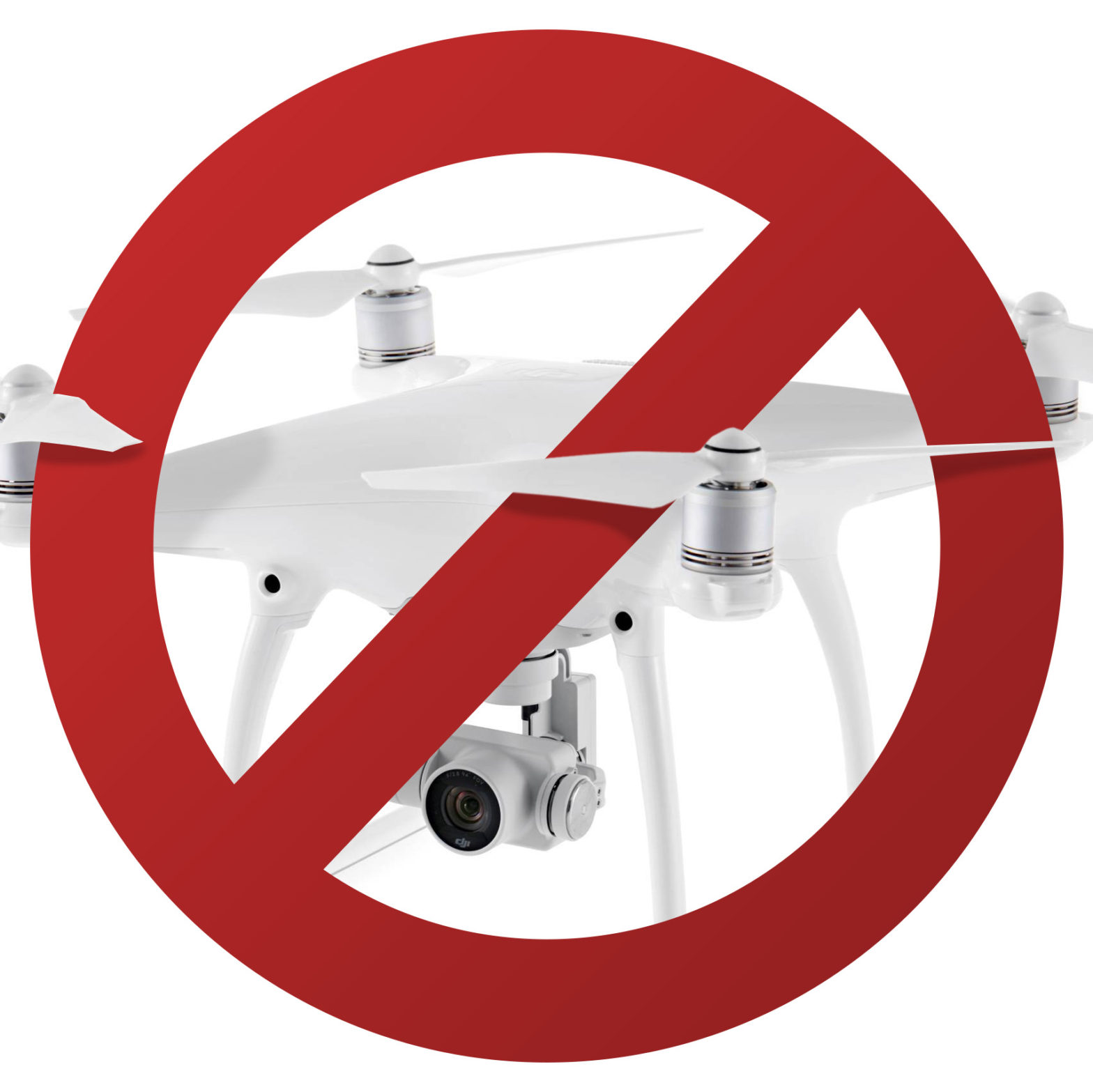
I tend to do a lot of research before I invest into anything. As a professional filmmaker I have experienced a rising interest from clients who wish to have aerial footage for their videos. Last year, I demanded an aerial shot to begin my short film Immobile. The demand is there, and as I began to look into purchasing my own unmanned aerial camera platform, I decided to take a look at the law. You know? For giggles. As it turns out, there is quite a bit of rigamarole to work through.
To put it simply: the Federal Aviation Administration (FAA) governs the sky above the United States of America. They demand all Small Unmanned Aircraft Systems (sUAS) where the Unmanned Aerial Vehicle (UAV or “drone”) weighs more than half a pound but less than fifty-five pounds, be registered before taking off into the nation’s sky. This has quite a lot of benefits, requires only a few weeks of waiting and a fee of $5 to be repeated once every three years. Not a problem. I can still pick up a DJI Phantom 4 and fly it around in my living room for practice until the paperwork arrives at my doorstep.
Affordable, professional 4K aerial footage is definitely a service I wish to offer my clients.
As far as the FAA is concerned, any UAV in operation is as important as a big 747 carrying three-hundred passengers, so a mandatory registration makes sense. If you want to fly your little drone around safely in a public park away from pedestrians and people’s private property and you keep your eyes on it at all times and always use common sense in its operation, then you’ve done all you need to legally do.
But what if you’ve been hired to take your drone up and snap some shots of someone’s business? This is where things gets silly.
Affordable, professional 4K aerial footage is definitely a service I wish to offer my clients. However, for commercial purposes the FAA demands that all light aircraft – including your UAV – be flown by a licensed and certified pilot. This means either hiring a pilot with sUAS experience to man your drone, or you spend several months and tens of thousands of dollars to become a licensed pilot with the certifications necessary to fly commercial aircraft. Because I’m not a pilot, nor do I know any with mad sUAS skills, that basically means that my UAV can not legally be used as a professional video or photography tool. Getting caught means an extremely steep fine and a few years in prison.
Until the FAA makes allowances for a simple ground certification for commercial sUAS use (like getting a drivers license) I don’t see how I can legally offer unmanned aerial footage services to my clients at this point in time. Considering the pressure professional videographers and photographers like myself are placing on the FAA to make things right, this will all hopefully change soon.
I had a dilemma at one point when I considered the following lenses:
Canon EF 24-70 f/2.8 L USM ($1200) Sigma 24-70 EX DG MACRO ($600)
My research showed time and again that you get what you pay for and though it has a nice price tag, the Sigma was inferior to the Canon in both build and image quality.
However, I didn’t have $1200 on me at the time. Also, I knew that my 20D offered a 1.6x FOV crop factor which would push the focal length past walkaround and into portrait. Not a bad thing, but also not nearly wide enough for what I would want the lens I’d buy to facilitate. A change in options was needed.
17mm seemed appropriate as that would become near 24mm on my 20D. Therefore, I considered the following:
Canon EF 17-40 f/4 L USM ($700) Canon EF-S 17-55 f/2.8 IS USM ($1000) Sigma 17-70 f/2.8-4.5 DC MACRO ($590)
Again, my research nixed the Sigma as being inferior to either Canon lens. So it was down to the two Canons.
Do I need IS for anything?
No, I shoot mostly bright outdoors, studio strobe lit and low-light sports, each of which could not use IS.
That f/2.8 sounds pretty good, though.
Yeah, but it’s an EF-S mount and my next camera will either be a 5D or a 1-series, neither of which utilize EF-S and I don’t want to invest in a technology that I won’t be using during the next ten years. My 20D’s shutter will probably last another two years and I expect to replace it before then with another body.
Besides, the EF-S is still a consumer lens and suffers from the plastic build and an image quality that certainly is not as good as the L lens I’m also looking it. Plus, it’s more expensive because of the wider aperture and IS function.
I’m thinking I’d get more mileage out of the 17-40. It’s better built, has superior image quality, is durable, lets in enough light to hand hold in an ambient-lit room at ISO 800 and it’ll do just fine with certain styles of portraiture at the short end. Plus, it’s pretty cheap for a pro lens and very much within my price range.
So, I went with the 17-40 as my general purpose lens and have been so impressed that I’ve decided to never buy another consumer general purpose lens. Ever. Never ever.
Does this mean I won’t buy a sweet little fisheye lens from a Russian manufacturer?
Not at all. In fact, I already own one.
What about a LensBaby?
Are you kidding? Those things are super sweet and I want one!
But, these a specialty lenses, not general purpose lenses. General purpose lenses don’t leave the camera bag and sometimes don’t dismount the camera for days on end. Therefore my general purpose lenses are all Canon L-series. They’re simply better lenses, and that’s it.
However, although you do get what you pay for, there’s nothing wrong with living within your means and buying what you can afford. It’s why I went with the 17-40 rather than the 24-70, ultimately. It’s also the same process that led me to decide on the 70-200 f/2.8 rather than the more expensive, IS-enabled younger brother.
Sigma is pretty darn good and though not as great as Canon, still sees a lot of professional use. So if I didn’t need to worry about image quality (because I make giant prints) I’d go with the Sigma and save some beans, definitely. Then I’d go to Red Lobster with the money I saved…