To help me compare various current cinema formats, I created this handy document for myself and thought I’d share it with a bit of history lessons and a bunch of snarky commentary.
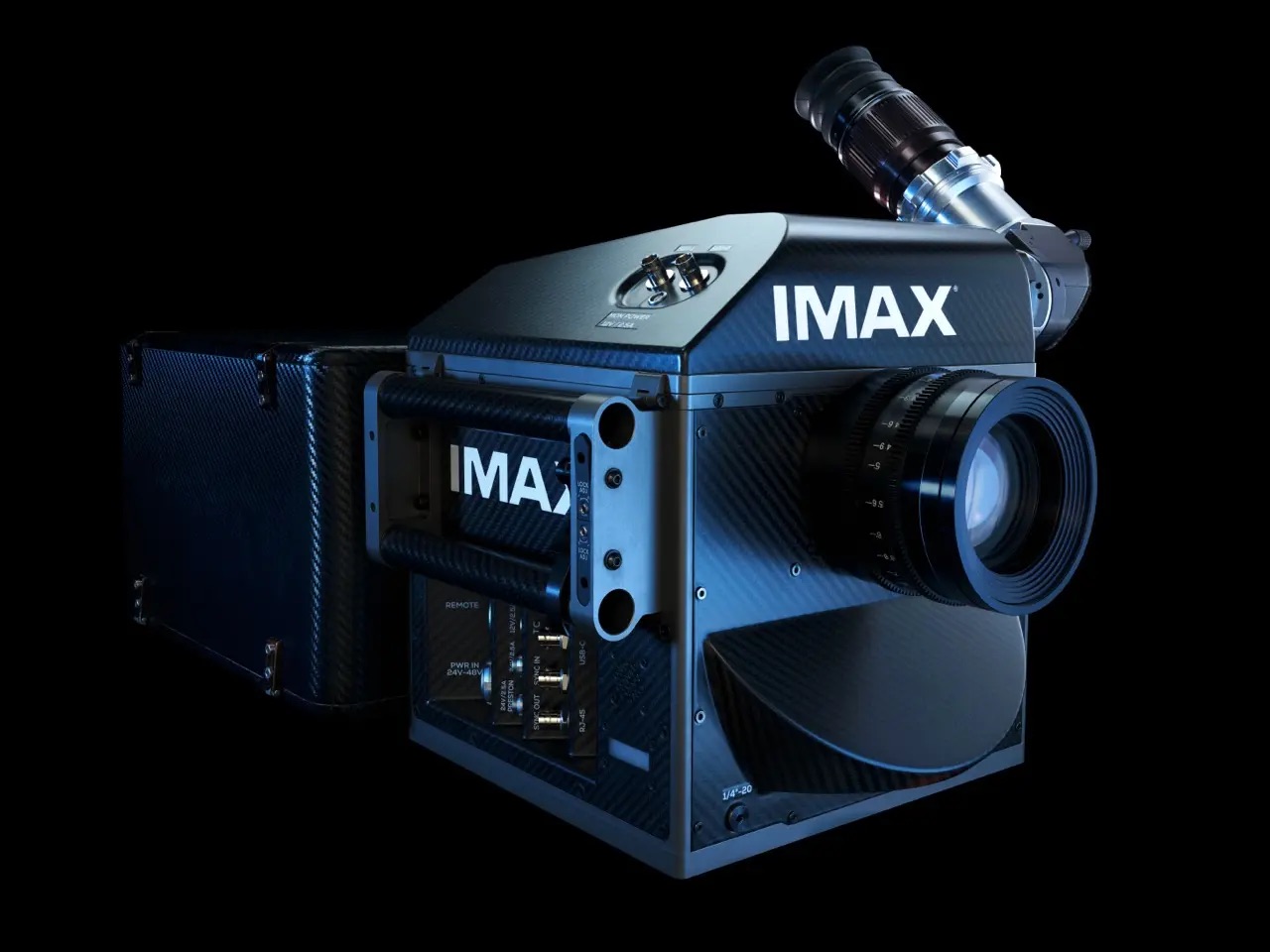
Let’s start with the frisky Canadian invention of 70mm IMAX 15/70 format, which debuted in 1970 and only got to be seen in certain special theaters and museums around the world. However, Christopher Nolan has used it more and more frequently in his films starting with a few exciting sequences in his Batman films, then Dunkirk and Tenet, but now most recently to shoot the entirety of his 2026 epic The Odyssey with the new camera developed over two years by IMAX, with Nolan and Odyssey cinematographer Hoyte van Hoytema, named IMAX Keighley. IMAX 15/70 is so-called because each 70mm frame of film is 15-perfs wide. That’s why a standard mag of Kodak 15/70 film only lasts three minutes.
IMAX
IMAX 70mm film (“15/70”)
69.6 mm x 48.5 mm
1.43:1
Large Format
The original major large format was Todd-AO invented in 1954 by Mike Todd and Robert Naify in partnership with the American Optical Company. Panavision’s version of Todd-AO’s process, Super Panavision 70, was introduced in 1959. The anamorphic version, Ultra Panavision 70, followed in 1962 — itself originally developed by MGM in 1956 as Camera 65 and famously used on William Wyler’s 1959 epic Ben-Hur.
Ben-Hur in awesome 2.76:1 anamorphic.
Super Panavision 70
52.63 mm x 23.01 mm
2.20:1
Ultra Panavision 70 (anamorphic)
52.63 mm x 23.01 mm
2.76:1
Digital Large Format Cameras
Sensor Size (mm)
Resolution
Aspect Ratio
Arri Alexa 65
54.12 x 25.58
6,560 x 3,102
2.12:1
Blackmagic URSA Cine 17K 65
50.8 x 23.3
17,520 x 8,040
2.20:1
Fujifilm GFX Eterna 55
43.8 x 32.9
3,840 x 2,880
1.33:1 / 4:3
RED V-RAPTOR XL [X] 8K VV
40.96 x 21.60
8,192 x 4,320
1.90:1 / 17:9
Arri Alexa LF
36.70 x 25.54
4,448 x 3,096
1.44:1 / 3:2
VistaVision
What the kids call “full-frame” nowadays for some reason; thanks, Canon. Created in 1954 by Paramount Pictures, VistaVision takes standard 135 Format film used in both 35mm stills photography and Super 35 motion picture cinematography, and runs it horizontally through the camera like in a stills camera. It makes 4-perf Super 35 8-perf VistaVision and effectively doubles the resolution of the image and halves the grain. Famously used to film Cecil B De Mille’s 1956 theatrical opus The Ten Commandments, by ILM’s Kerner Optical for the visual effects of the one good Star Wars trilogy, and, best of all, Alfred Hitchcock’s 1959 thriller North by Northwest.
North by Northwest in 1.85:1 VistaVision.
VistaVision / 135 Format (“Full-Frame”)
36 mm x 24 mm
1.44:1 / 3:2
Digital VistaVision Cameras
Sensor Size (mm)
Resolution
Aspect Ratio
Sony FX5
35.9 x 24
4,992 x 3,328
1.44:1 / 3:2
Canon EOS 6D Mark II
35.9 x 24
1,920 x 1,080
1.77:1 / 16:9
Sony VENICE 2
35.9 x 23.9
8,640 x 5,760
1.44:1 / 3:2
Canon EOS C50
35.9 x 23.9
6,960 x 4,640
1.44:1 / 3:2
Nikon ZR
35.9 x 23.9
6,048 x 3,402
1.77:1 / 16:9
Panasonic Lumix S5IIX
35.6 x 23.8
6,000 x 4,000
1.44:1 / 3:2
Blackmagic PYXIS 12K
35.64 x 23.32
12,288 x 8,040
1.44:1 / 3:2
Academy 35 & Super 35
Academy 35 is photographic 35mm film moving vertically through the motion picture camera and has been the standard since 1932. Super 35 has been the absolute gold standard of motion picture production formats since 1984. I guarantee most every one of your favorite movies (and TV shows) was shot in either Academy 35 or Super 35. Here’s a list of some ten of my favorite films of all time and only one of them wasn’t shot on 35, and seven of those are anamorphic.
Star Trek: The Next Generation shot in open gate Super 35.Alien in 2.39:1 anamorphic on Academy 35.
Academy 35
22 mm x 16 mm
1.375:1
Super 35
24.89 mm x 18.66 mm
1.33:1 / 4:3
Digital Super 35 Cameras
Sensor Size (mm)
Resolution
Aspect Ratio
Arri Alexa 35
28.25 x 18.17
4,608 x 3,164
1.46:1 / 3.2
RED Komodo
27.03 x 14.26
6,144 x 3,240
1.90:1 / 17:9
RED Komodo-X
27.03 x 14.26
6,144 x 3,240
1.90:1 / 17:9
Sony FS7 II
24.6 x 13.1
4,096 x 2,160
1.90:1 / 17:9
small digital formats
28 Days Later was shot in SD on MiniDV with the 1/3-inch 3CCD chip Canon XL-1.
Small Digital Formats
Sensor Size (mm)
Aspect Ratio
APS-C (Nikon, Sony)
23.6 x 15.8
1.44:1 / 3:2
APS-C (Canon)
22.3 x 14.9
1.44:1 / 3:2
Micro Four Thirds
17.3 x 13
1.33:1 / 4:3
1-Inch
13.2 x 8.8
1.33:1 / 4:3
1/1.65-Inch (iPhone)
7.6 x 5.7
1.33:1 / 4:3
1/2-Inch
6.4 x 4.8
1.33:1 / 4:3
1/3-Inch
4.8 x 3.6
1.33:1 / 4:3
1/4-Inch
3.2 x 2.4
1.33:1 / 4:3
Small Film Formats
Super 16
12.52 mm x 7.41 mm
1.66:1
Super 8
5.79 mm x 4.01 mm
1.36:1
Just to be cheeky, and to add perception, here are a few popular digital medium format stills cameras for comparison.
Large Format Digital
Camera
Sensor Size (mm)
Resolution
Aspect Ratio
Phase One XT
53.4 x 40
14,204 x 10,652
4:3
Fujifilm GFX
43.8 x 32.9 (“44×33”)
3,840 x 2,880
4:3
Hasselblad X
43.8 x 32.9 (“44×33”)
3,840 x 2,880
4:3
And just for fun, here are the common classic large and medium film formats to illustrate how small the bonkers cinema definition of “large” format really is. Hint: one is typically measured in inches.
Large Format Film
Large Format (inches)
Large Format (mm)
4×5
102 x 127
5×7
127 x 178
8×10
203 x 254
Medium Format Film
Medium Format
Medium Format (mm)
6×4.5, “645”
56 x 41.5
6×6, “square”
56 x 56
6×7, “ideal”
56 x 69
6×8
56 x 72
6×9
56 x 82
Conclusion
With all of these modern digital and analog options making “large format” cinematography available to almost anyone, it’s certainly an exciting time to be alive and a filmmaker.
Discover more from Jason R. Johnston
Subscribe to get the latest posts sent to your email.



Leave a Reply